

Hello there, and welcome back to Blazing English. I’m Emily, your host, and I’m so happy you’re spending some of your day with me. Here, we practice your listening skills and learn English through American culture and everyday language. This week, we are exploring a wonderful theme: Nature and the Environment. Today, we’re going to take a virtual trip to one of the most famous places in the United States: Yellowstone National Park. It’s a huge, beautiful park filled with amazing natural wonders. Grab a warm drink, get comfortable, and let’s explore it together.
Before we get started, let’s look at five words you’ll hear in today’s story. These words will help us talk about nature. Listen for the words: wilderness, breathtaking, wildlife, geyser, and to preserve. Don’t worry if you don’t know them yet. I will explain them all later, but for now, just try to notice them as we chat.
Yellowstone is located mostly in the state of Wyoming. It’s a massive area of protected nature. When you visit, you feel like you are stepping into a true wilderness. There are deep canyons, green forests, and quiet lakes. The views are absolutely breathtaking. When you look at the mountains rising into the blue sky, it honestly takes your breath away.
One of the most exciting things about Yellowstone is the animals. It’s a great place to see wildlife in their natural home. You might see giant bison walking slowly across the road, or wolves howling in the distance. You might even see a bear looking for berries in the bushes. It’s amazing to watch these animals live freely.
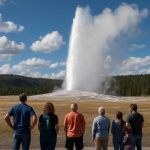
But Yellowstone is probably most famous for what lies underground. There is a lot of heat beneath the earth here. This heat creates hot springs and a special kind of hot spring called a geyser. A geyser shoots boiling water and steam high into the air. The most famous geyser in the park is called Old Faithful because it erupts, or shoots water, very regularly. You can stand there and smell the sulfur in the air, hear the water rumbling, and watch the steam rise.
In eighteen seventy-two, the United States government decided to preserve this special land. They wanted to protect it so that people could enjoy it forever. Because of this, Yellowstone became the world’s very first national park. Today, visitors from all over the world come to experience this beautiful place.
Now, let’s take a quick look at those five words we heard today to make sure we understand how to use them.
Our first word is wilderness. A wilderness is a wild, natural area where people do not live and there are no buildings. For example, we went hiking in the deep wilderness to get away from the noisy city.
Next is breathtaking. If something is breathtaking, it is extremely beautiful or surprising. It literally feels like it takes your breath away. For example, the view from the top of the mountain was absolutely breathtaking.
Then we had wildlife. Wildlife refers to wild animals, birds, and insects living in their natural environment. For example, you should drive slowly through the park to protect the local wildlife.
Our fourth word is geyser. A geyser is a hot spring that occasionally shoots hot water and steam up into the air. For example, we waited for an hour to see the famous geyser erupt.
Finally, we have the verb to preserve. To preserve means to keep something safe from being damaged or changed, so it stays the same. For example, it is important to preserve our historic buildings for future generations.
That’s all for our trip to Yellowstone today! I hope you enjoyed learning about this amazing place. Remember, learning a language is a journey. It happens gradually, step by step, through regular practice and listening. You are doing a fantastic job, so keep it up.
Tomorrow, we’ll continue our theme of Nature and the Environment. We are going to visit another incredible place in America. We’ll learn about the Grand Canyon and how it formed over millions of years. I think you’re going to love it.
Thank you so much for listening to Blazing English. Have a wonderful day, and I’ll talk to you tomorrow. Bye!
Español
Hola, y bienvenidos de nuevo a Blazing English. Soy Emily, su anfitriona, y estoy muy feliz de que pasen parte de su día conmigo. Aquí, practicamos sus habilidades de comprensión auditiva y aprendemos inglés a través de la cultura estadounidense y el lenguaje cotidiano. Esta semana, estamos explorando un tema maravilloso: la naturaleza y el medio ambiente. Hoy, vamos a hacer un viaje virtual a uno de los lugares más famosos de los Estados Unidos: el Parque Nacional Yellowstone. Es un parque enorme y hermoso, lleno de increíbles maravillas naturales. Tomen una bebida caliente, pónganse cómodos y exploremos juntos.
Antes de comenzar, echemos un vistazo a cinco palabras que escucharán en la historia de hoy. Estas palabras nos ayudarán a hablar sobre la naturaleza. Presten atención a las palabras: wilderness (naturaleza virgen), breathtaking (impresionante), wildlife (vida silvestre), geyser (géiser) y to preserve (preservar). No se preocupen si aún no las conocen. Se las explicaré todas más tarde, pero por ahora, solo intenten notarlas mientras charlamos.
Yellowstone se encuentra principalmente en el estado de Wyoming. Es una zona enorme de naturaleza protegida. Cuando lo visitas, sientes que estás entrando en un verdadero wilderness. Hay cañones profundos, bosques verdes y lagos tranquilos. Las vistas son absolutamente breathtaking. Cuando miras las montañas elevarse hacia el cielo azul, honestamente te deja sin aliento.
Una de las cosas más emocionantes de Yellowstone son los animales. Es un gran lugar para ver wildlife en su hogar natural. Podrían ver bisontes gigantes caminando lentamente por la carretera, o lobos aullando a lo lejos. Incluso podrían ver a un oso buscando bayas en los arbustos. Es increíble ver a estos animales vivir libremente.
But Yellowstone es probablemente más famoso por lo que se encuentra bajo tierra. Hay mucho calor debajo de la tierra aquí. Este calor crea aguas termales y un tipo especial de agua termal llamado geyser. Un geyser lanza agua hirviendo y vapor a gran altura en el aire. El geyser más famoso del parque se llama Old Faithful porque entra en erupción, o lanza agua, con mucha regularidad. Pueden pararse allí y oler el azufre en el aire, escuchar el rugido del agua y ver cómo se eleva el vapor.
En mil ochocientos setenta y dos, el gobierno de los Estados Unidos decidió to preserve esta tierra especial. Querían protegerla para que la gente pudiera disfrutarla para siempre. Debido a esto, Yellowstone se convirtió en el primer parque nacional del mundo. Hoy en día, visitantes de todo el mundo vienen a experimentar este hermoso lugar.
Ahora, echemos un vistazo rápido a esas cinco palabras que escuchamos hoy para asegurarnos de que entendemos cómo usarlas.
Nuestra primera palabra es wilderness. Un wilderness es un área natural y salvaje donde la gente no vive y no hay edificios. For example, we went hiking in the deep wilderness to get away from the noisy city. (Por ejemplo, fuimos a caminar en la profunda naturaleza virgen para alejarnos de la ruidosa ciudad.)
La siguiente es breathtaking. Si algo es breathtaking, es extremadamente hermoso o sorprendente. Literalmente se siente como si te dejara sin aliento. For example, the view from the top of the mountain was absolutely breathtaking. (Por ejemplo, la vista desde la cima de la montaña era absolutamente impresionante.)
Luego tuvimos wildlife. El término wildlife se refiere a los animales salvajes, aves e insectos que viven en su entorno natural. For example, you should drive slowly through the park to protect the local wildlife. (Por ejemplo, debes conducir despacio por el parque para proteger la vida silvestre local.)
Nuestra cuarta palabra es geyser. Un geyser es una fuente termal que ocasionalmente lanza agua caliente y vapor al aire. For example, we waited for an hour to see the famous geyser erupt. (Por ejemplo, esperamos una hora para ver el famoso géiser entrar en erupción.)
Finalmente, tenemos el verbo to preserve. To preserve significa evitar que algo se dañe o cambie, para que se mantenga igual. For example, it is important to preserve our historic buildings for future generations. (Por ejemplo, es importante preservar nuestros edificios históricos para las generaciones futuras.)
¡Eso es todo por nuestro viaje a Yellowstone hoy! Espero que hayan disfrutado aprendiendo sobre este increíble lugar. Recuerden, aprender un idioma es un viaje. Ocurre gradualmente, paso a paso, a través de la práctica y la escucha constantes. Están haciendo un trabajo fantástico, así que sigan así.
Mañana continuaremos con nuestro tema de la naturaleza y el medio ambiente. Vamos a visitar otro lugar increíble en América. Aprenderemos sobre el Gran Cañón y cómo se formó a lo largo de millones de años. Creo que les va a encantar.
Muchas gracias por escuchar Blazing English. Que tengan un día maravilloso y les hablaré mañana. ¡Adiós!
Français
Bonjour et bienvenue à nouveau dans Blazing English. Je m’appelle Emily, votre animatrice, et je suis ravie que vous passiez un moment de votre journée avec moi. Ici, nous pratiquons vos compétences de compréhension orale et apprenons l’anglais à travers la culture américaine et la langue de tous les jours. Cette semaine, nous explorons un thème magnifique : la nature et l’environnement. Aujourd’hui, nous allons faire un voyage virtuel dans l’un des endroits les plus célèbres des États-Unis : le parc national de Yellowstone. C’est un parc immense et magnifique, rempli d’incroyables merveilles naturelles. Prenez une boisson chaude, installez-vous confortablement et explorons-le ensemble.
Avant de commencer, jetons un coup d’œil à cinq mots que vous entendrez dans l’histoire d’aujourd’hui. Ces mots nous aideront à parler de la nature. Soyez attentifs aux mots : wilderness (nature sauvage), breathtaking (à couper le souffle), wildlife (faune), geyser (geyser) et to preserve (préserver). Ne vous inquiétez pas si vous ne les connaissez pas encore. Je vous les expliquerai tous plus tard, mais pour l’instant, essayez simplement de les remarquer pendant que nous discutons.
Yellowstone est situé principalement dans l’État du Wyoming. C’est une zone immense de nature protégée. Lorsque vous le visitez, vous avez l’impression de pénétrer dans un véritable wilderness. Il y a des canyons profonds, des forêts vertes et des lacs tranquilles. Les paysages sont absolument breathtaking. Quand vous regardez les montagnes s’élever dans le ciel bleu, cela vous coupe honnêtement le souffle.
L’une des choses les plus captivantes de Yellowstone, ce sont les animaux. C’est un endroit idéal pour observer la wildlife dans son habitat naturel. Vous pourriez voir des bisons géants marcher lentement sur la route, ou des loups hurler au loin. Vous pourriez même voir un ours chercher des baies dans les buissons. C’est extraordinaire de regarder ces animaux vivre en toute liberté.
Mais Yellowstone est probablement plus célèbre pour ce qui se trouve sous terre. Il y a beaucoup de chaleur sous la terre ici. Cette chaleur crée des sources chaudes et un type particulier de source chaude appelé geyser. Un geyser projette de l’eau bouillante et de la vapeur très haut dans les airs. Le geyser le plus célèbre du parc s’appelle Old Faithful parce qu’il entre en éruption, ou projette de l’eau, de manière très régulière. Vous pouvez vous tenir là et sentir le soufre dans l’air, entendre l’eau gronder et regarder la vapeur s’élever.
En dix-huit cent soixante-douze, le gouvernement des États-Unis a décidé de to preserve cette terre spéciale. Ils voulaient la protéger afin que les gens puissent en profiter pour toujours. C’est ainsi que Yellowstone est devenu le tout premier parc national au monde. Aujourd’hui, des visiteurs du monde entier viennent découvrir cet endroit magnifique.
Maintenant, jetons un coup d’œil rapide à ces cinq mots que nous avons entendus aujourd’hui pour nous assurer que nous comprenons comment les utiliser.
Notre premier mot est wilderness. Un wilderness est une zone sauvage et naturelle où les gens ne vivent pas et où il n’y a pas de bâtiments. For example, we went hiking in the deep wilderness to get away from the noisy city. (Par exemple, nous sommes allés faire de la randonnée en pleine nature sauvage pour nous éloigner de la ville bruyante.)
Ensuite, breathtaking. Si quelque chose est breathtaking, c’est extrêmement beau ou surprenant. On a littéralement l’impression que cela nous coupe le souffle. For example, the view from the top of the mountain was absolutely breathtaking. (Par exemple, la vue depuis le sommet de la montagne était absolument à couper le souffle.)
Ensuite, nous avions wildlife. La wildlife fait référence aux animaux sauvages, aux oiseaux et aux insectes qui vivent dans leur environnement naturel. For example, you should drive slowly through the park to protect the local wildlife. (Par exemple, vous devriez conduire lentement dans le parc pour protéger la faune locale.)
Notre quatrième mot est geyser. Un geyser est une source chaude qui projette de temps en temps de l’eau chaude et de la vapeur dans les airs. For example, we waited for an hour to see the famous geyser erupt. (Par exemple, nous avons attendu une heure pour voir le célèbre geyser entrer en éruption.)
Enfin, nous avons le verbe to preserve. To preserve signifie empêcher que quelque chose ne soit endommagé ou modifié, afin que cela reste identique. For example, it is important to preserve our historic buildings for future generations. (Par exemple, il est important de préserver nos bâtiments historiques pour les générations futures.)
C’est tout pour notre voyage à Yellowstone aujourd’hui ! J’espère que vous avez aimé en apprendre plus sur cet endroit incroyable. N’oubliez pas que l’apprentissage d’une langue est un voyage. Cela se fait progressivement, étape par étape, grâce à une pratique et une écoute régulières. Vous faites un travail fantastique, alors continuez comme ça.
Demain, nous poursuivrons notre thème de la nature et de l’environnement. Nous allons visiter un autre endroit incroyable en Amérique. Nous en apprendrons plus sur le Grand Canyon et sur la façon dont il s’est formé au cours de millions d’années. Je pense que vous allez adorer.
Merci beaucoup d’écouter Blazing English. Passez une merveilleuse journée et je vous parlerai demain. Au revoir !
Português
Olá a todos, e bem-vindos de volta ao Blazing English. Eu sou a Emily, sua anfitriã, e estou muito feliz por você estar passando parte do seu dia comigo. Aqui, nós praticamos suas habilidades de compreensão auditiva e aprendemos inglês por meio da cultura americana e da linguagem do dia a dia. Esta semana, estamos explorando um tema maravilhoso: Natureza e Meio Ambiente. Hoje, faremos uma viagem virtual a um dos lugares mais famosos dos Estados Unidos: o Parque Nacional de Yellowstone. É um parque enorme e bonito, cheio de maravilhas naturais incríveis. Pegue uma bebida quente, fique confortável e vamos explorar juntos.
Antes de começarmos, vamos dar uma olhada em cinco palavras que você ouvirá na história de hoje. Essas palavras nos ajudarão a falar sobre a natureza. Fique atento às palavras: wilderness (natureza selvagem), breathtaking (deslumbrante), wildlife (vida selvagem), geyser (gêiser) e to preserve (preservar). Não se preocupe se você ainda não as conhece. Vou explicar todas elas mais tarde, mas por enquanto, apenas tente notá-las enquanto conversamos.
Yellowstone está localizado principalmente no estado de Wyoming. É uma área enorme de natureza protegida. Quando você o visita, sente que está entrando em uma verdadeira wilderness. Há cânions profundos, florestas verdes e lagos tranquilos. As vistas são absolutamente breathtaking. Quando você olha para as montanhas subindo em direção ao céu azul, honestamente, isso tira o seu fôlego.
Uma das coisas mais emocionantes sobre Yellowstone são os animais. É um ótimo lugar para ver wildlife em seu lar natural. Você pode ver bisões gigantes caminhando lentamente pela estrada, ou lobos uivando ao longe. Você pode até ver um urso procurando frutas silvestres nos arbustos. É incrível ver esses animais vivendo livremente.
Mas Yellowstone é provavelmente mais famoso pelo que está debaixo da terra. Há muito calor sob a terra aqui. Esse calor cria fontes termais e um tipo especial de fonte termal chamado geyser. Um geyser jorra água fervente e vapor bem alto no ar. O geyser mais famoso do parque é chamado de Old Faithful porque ele entra em erupção, ou jorra água, de forma muito regular. Você pode ficar lá e sentir o cheiro de enxofre no ar, ouvir a água roncando e ver o vapor subir.
Em dezoito setenta e dois, o governo dos Estados Unidos decidiu to preserve esta terra especial. Eles queriam protegê-la para que as pessoas pudessem aproveitá-la para sempre. Por causa disso, Yellowstone se tornou o primeiro parque nacional do mundo. Hoje, visitantes de todo o mundo vêm para vivenciar este lugar lindo.
Agora, vamos dar uma olhada rápida nessas cinco palavras que ouvimos hoje para garantir que entendemos como usá-las.
Nossa primeira palavra é wilderness. Uma wilderness é uma área selvagem e natural onde as pessoas não vivem e não há construções. For example, we went hiking in the deep wilderness to get away from the noisy city. (Por exemplo, nós fomos fazer caminhada na profunda natureza selvagem para fugir da cidade barulhenta.)
A próxima é breathtaking. Se algo é breathtaking, é extremamente bonito ou surpreendente. Literalmente parece que tira o seu fôlego. For example, the view from the top of the mountain was absolutely breathtaking. (Por exemplo, a vista do topo da montanha era absolutamente deslumbrante.)
Depois nós tivemos wildlife. Wildlife refere-se a animais selvagens, aves e insetos que vivem em seu ambiente natural. For example, you should drive slowly through the park to protect the local wildlife. (Por exemplo, você deve dirigir devagar pelo parque para proteger a vida selvagem local.)
Nossa quarta palavra é geyser. Um geyser é uma fonte termal que ocasionalmente jorra água quente e vapor para o ar. For example, we waited for an hour to see the famous geyser erupt. (Por exemplo, nós esperamos por uma hora para ver o famoso gêiser entrar em erupção.)
Finalmente, temos o verbo to preserve. To preserve significa manter algo a salvo de ser danificado ou alterado, para que permaneça igual. For example, it is important to preserve our historic buildings for future generations. (Por exemplo, é importante preservar nossos edifícios históricos para as gerações futuras.)
Isso é tudo para a nossa viagem a Yellowstone hoje! Espero que você tenha gostado de aprender sobre este lugar incrível. Lembre-se, aprender um idioma é uma jornada. Acontece gradualmente, passo a passo, por meio de prática e escuta regulares. Você está fazendo um trabalho fantástico, então continue assim.
Amanhã, continuaremos com o nosso tema de Natureza e Meio Ambiente. Vamos visitar outro lugar incrível na América. Vamos aprender sobre o Grand Canyon e como ele se formou ao longo de milhões de anos. Acho que você vai adorar.
Muito obrigada por escutar o Blazing English. Tenha um dia maravilhoso e falo com você amanhã. Tchau!
Italiano
Ciao a tutti e bentornati su Blazing English. Sono Emily, la vostra conduttrice, e sono molto felice che stiate trascorrendo parte della vostra giornata con me. Qui esercitiamo le vostre abilità di ascolto e impariamo l’inglese attraverso la cultura americana e la lingua di tutti i giorni. Questa settimana esploreremo un tema meraviglioso: la natura e l’ambiente. Oggi faremo un viaggio virtuale in uno dei luoghi più famosi degli Stati Uniti: il Parco Nazionale di Yellowstone. È un parco enorme e bellissimo, pieno di incredibili meraviglie naturali. Prendete una bevanda calda, mettetevi comodi ed esploriamolo insieme.
Prima di iniziare, diamo un’occhiata a cinque parole che sentirete nella storia di oggi. Queste parole ci aiuteranno a parlare di natura. Fate attenzione alle parole: wilderness (natura incontaminata), breathtaking (mozzafiato), wildlife (fauna selvatica), geyser (geyser) e to preserve (preservare). Non preoccupatevi se non le conoscete ancora. Ve le spiegherò tutte più tardi, ma per ora cercate solo di farci caso mentre chiacchieriamo.
Yellowstone si trova principalmente nello stato del Wyoming. È un’area enorme di natura protetta. Quando lo si visita, sembra di entrare in una vera e propria wilderness. Ci sono canyon profondi, fitte foreste e laghi silenziosi. I panorami sono assolutamente breathtaking. Quando si guardano le montagne che si stagliano nel cielo blu, onestamente toglie il fiato.
Una delle cose più emozionanti di Yellowstone sono gli animali. È un luogo fantastico per vedere la wildlife nel suo habitat naturale. Potreste vedere giganteschi bisonti che camminano lentamente sulla strada, o lupi che ululano in lontananza. Potreste persino vedere un orso che cerca bacche tra i cespugli. È straordinario guardare questi animali vivere in libertà.
Ma Yellowstone è probabilmente più famoso per ciò che si trova sottoterra. Qui c’è molto calore sotto la terra. Questo calore crea sorgenti termali e un tipo speciale di sorgente termale chiamato geyser. Un geyser spruzza acqua bollente e vapore ad alta quota nell’aria. Il geyser più famoso del parco si chiama Old Faithful perché erutta, ovvero spruzza acqua, con estrema regolarità. Potete stare lì e annusare lo zolfo nell’aria, sentire l’acqua che romba e guardare il vapore che sale.
Nel milleottocentosettantadue, il governo degli Stati Uniti decise di to preserve questa terra speciale. Volevano proteggerla in modo che le persone potessero goderne per sempre. Per questo motivo, Yellowstone è diventato il primissimo parco nazionale al mondo. Oggi, visitatori da tutto il mondo vengono a scoprire questo luogo meraviglioso.
Ora diamo un rapido sguardo a quelle cinque parole che abbiamo sentito oggi per assicurarci di aver capito come usarle.
La nostra prima parola è wilderness. Una wilderness è un’area selvaggia e naturale dove le persone non vivono e non ci sono edifici. For example, we went hiking in the deep wilderness to get away from the noisy city. (Per esempio, siamo andati a fare un’escursione nella profonda natura incontaminata per allontanarci dalla città rumorosa.)
La prossima è breathtaking. Se qualcosa è breathtaking, è estremamente bello o sorprendente. Sembra letteralmente che ti tolga il fiato. For example, the view from the top of the mountain was absolutely breathtaking. (Per esempio, la vista dalla cima della montagna era assolutamente mozzafiato.)
Poi abbiamo avuto wildlife. Wildlife si riferisce ad animali selvatici, uccelli e insetti che vivono nel loro ambiente naturale. For example, you should drive slowly through the park to protect the local wildlife. (Per esempio, dovresti guidare lentamente attraverso il parco per proteggere la fauna selvatica locale.)
La nostra quarta parola è geyser. Un geyser è una sorgente termale che occasionalmente spruzza acqua calda e vapore nell’aria. For example, we waited for an hour to see the famous geyser erupt. (Per esempio, abbiamo aspettato un’ora per vedere il famoso geyser eruttare.)
Infine abbiamo il verbo to preserve. To preserve significa proteggere qualcosa affinché non venga danneggiato o modificato, in modo che rimanga uguale. For example, it is important to preserve our historic buildings for future generations. (Per esempio, è importante preservare i nostri edifici storici per le generazioni future.)
È tutto per il nostro viaggio a Yellowstone di oggi! Spero che vi sia piaciuto scoprire questo luogo straordinario. Ricordate, imparare una lingua è un viaggio. Avviene gradualmente, passo dopo passo, attraverso la pratica e l’ascolto regolari. State facendo un lavoro fantastico, quindi continuate così.
Domani continueremo con il nostro tema della natura e dell’ambiente. Visiteremo un altro luogo incredibile in America. Impareremo a conoscere il Grand Canyon e come si è formato nel corso di milioni di anni. Penso che vi piacerà moltissimo.
Grazie mille per aver ascoltato Blazing English. Vi auguro una splendida giornata e vi parlerò domani. Ciao!
Deutsch
Hallo und herzlich willkommen zurück bei Blazing English. Ich bin Emily, eure Gastgeberin, und ich freue mich so sehr, dass ihr einen Teil eures Tages mit mir verbringt. Hier trainieren wir euer Hörverstehen und lernen Englisch durch die amerikanische Kultur und die Alltagssprache. Diese Woche beschäftigen wir uns mit einem wunderbaren Thema: Natur und Umwelt. Heute machen wir eine virtuelle Reise zu einem der berühmtesten Orte in den Vereinigten Staaten: dem Yellowstone-Nationalpark. Es ist ein riesiger, wunderschöner Park voller erstaunlicher Naturwunder. Schnappt euch ein warmes Getränk, macht es euch gemütlich und lasst uns den Park gemeinsam erkunden.
Bevor wir anfangen, schauen wir uns fünf Wörter an, die ihr in der heutigen Geschichte hören werdet. Diese Wörter werden uns helfen, über die Natur zu sprechen. Achtet auf die Wörter: wilderness (Wildnis), breathtaking (atemberaubend), wildlife (Tierwelt), geyser (Geysir) und to preserve (bewahren). Macht euch keine Sorgen, wenn ihr sie noch nicht kennt. Ich werde sie später alle erklären, aber versucht erst einmal, sie beim Plaudern wahrzunehmen.
Yellowstone liegt zum größten Teil im Bundesstaat Wyoming. Es ist ein riesiges Gebiet mit geschützter Natur. Wenn man den Park besucht, hat man das Gefühl, in eine echte wilderness einzutreten. Es gibt tiefe Schluchten, grüne Wälder und ruhige Seen. Die Aussichten sind absolut breathtaking. Wenn man sieht, wie sich die Berge in den blauen Himmel erheben, raubt es einem wirklich den Atem.
Eines der aufregendsten Dinge im Yellowstone-Park sind die Tiere. Es ist ein großartiger Ort, um wildlife in ihrem natürlichen Zuhause zu beobachten. Vielleicht sieht man riesige Bisons, die langsam über die Straße trotten, oder Wölfe, die in der Ferne heulen. Vielleicht sieht man sogar einen Bären, der in den Büschen nach Beeren sucht. Es ist faszinierend zu beobachten, wie diese Tiere in Freiheit leben.
Aber Yellowstone is wahrscheinlich am berühmtesten für das, was sich unter der Erde befindet. Hier gibt es eine Menge Hitze unter der Erdoberfläche. Diese Hitze erzeugt heiße Quellen und eine besondere Art von heißer Quelle, die man geyser nennt. Ein geyser schleudert kochendes Wasser und Dampf hoch in die Luft. Der berühmteste geyser im Park heißt Old Faithful, weil er sehr regelmäßig ausbricht, also Wasser ausstößt. Man kann dort stehen und den Schwefel in der Luft riechen, das Wasser grollen hören und dem Dampf beim Aufsteigen zusehen.
Im Jahr achtzehnhundertzweiundsiebzig beschloss die Regierung der Vereinigten Staaten, diese besondere Region to preserve. Sie wollten sie schützen, damit die Menschen sie für immer genießen können. Aus diesem Grund wurde Yellowstone zum allerersten Nationalpark der Welt. Heute kommen Besucher aus aller Welt, um diesen wunderschönen Ort zu erleben.
Nun werfen wir einen kurzen Blick auf die fünf Wörter, die wir heute gehört haben, um sicherzustellen, dass wir wissen, wie man sie verwendet.
Unser erstes Wort ist wilderness. Eine wilderness ist ein wildes, natürliches Gebiet, in dem keine Menschen leben und es keine Gebäude gibt. For example, we went hiking in the deep wilderness to get away from the noisy city. (Zum Beispiel sind wir tief in die Wildnis gewandert, um der lauten Stadt zu entkommen.)
Als Nächstes haben wir breathtaking. Wenn etwas breathtaking ist, ist es extrem schön oder überraschend. Es fühlt sich buchstäblich so an, als würde es einem den Atem rauben. For example, the view from the top of the mountain was absolutely breathtaking. (Zum Beispiel war die Aussicht vom Gipfel des Berges absolut atemberaubend.)
Dann hatten wir wildlife. Wildlife bezieht sich auf wilde Tiere, Vögel und Insekten, die in ihrer natürlichen Umgebung leben. For example, you should drive slowly through the park to protect the local wildlife. (Zum Beispiel sollte man langsam durch den Park fahren, um die einheimische Tierwelt zu schützen.)
Unser viertes Wort ist geyser. Ein geyser ist eine heiße Quelle, die gelegentlich heißes Wasser und Dampf in die Luft schleudert. For example, we waited for an hour to see the famous geyser erupt. (Zum Beispiel haben wir eine Stunde gewartet, um den berühmten Geysir ausbrechen zu sehen.)
Schließlich haben wir das Verb to preserve. To preserve bedeutet, etwas vor Beschädigung oder Veränderung zu bewahren, sodass es gleich bleibt. For example, it is important to preserve our historic buildings for future generations. (Zum Beispiel ist es wichtig, unsere historischen Gebäude für zukünftige Generationen zu bewahren.)
Das war es auch schon für unsere heutige Reise zum Yellowstone-Park! Ich hoffe, es hat euch Spaß gemacht, etwas über diesen erstaunlichen Ort zu erfahren. Denkt daran, dass das Lernen einer Sprache eine Reise ist. Es geschieht allmählich, Schritt für Schritt, durch regelmäßiges Üben und Zuhören. Ihr macht das fantastisch, also macht weiter so.
Morgen setzen wir unser Thema Natur und Umwelt fort. Wir werden einen anderen unglaublichen Ort in Amerika besuchen. Wir werden etwas über den Grand Canyon lernen und wie er sich über Millionen von Jahren gebildet hat. Ich glaube, es wird euch gefallen.
Vielen Dank fürs Zuhören bei Blazing English. Habt einen wunderbaren Tag, und wir hören uns morgen. Tschüss!