

Hello, and welcome to Blazing English. I’m so glad you’re here today. I’m Kenn, your host and friend. On this daily podcast, we practice English through American culture, nature, and everyday language. This week, our theme is nature and the environment. Today, we’re traveling to the West Coast to talk about one of the most incredible places on Earth, the giant Redwood forests of California. These forests are truly unique, and they’re home to some of the oldest living things in the world.
Before we step into the forest, let’s look at five important words you’ll hear in today’s episode. These words will help us describe these massive trees and the peaceful environment around them. Keep your ears open for the words towering, canopy, thrive, majestic, and tranquil. You’ll hear them naturally throughout our story today, and we’ll review them together at the end.
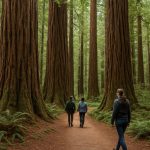
Imagine walking through a forest where the trees are so tall they seem to touch the clouds. These are the coast redwoods of Northern California. They’re the tallest living things on our planet. Some of them are over three hundred feet tall. That’s taller than a thirty-story building! When you stand at the bottom and look up, you can’t even see the tops of the trees.
As you walk on the soft forest floor, you look up at the incredible trunks. The towering trunks of these trees go straight up into the sky. It makes you feel very small, but in a wonderful way. The light that filters down is soft and green because of the thick forest canopy high above your head. This leafy roof blocks out most of the direct sunlight, creating a cool, quiet, and magical world below.
It smells amazing here, too. It smells like damp earth, fresh pine trees, and clean rain. These forests need a lot of water to survive. Northern California gets a lot of thick fog from the Pacific Ocean, and the redwoods actually drink the water from the fog. This unique weather helps them thrive. They don’t just survive, they really grow well, strong, and healthy here.
These trees can live for thousands of years, which is hard to even imagine. When you stand next to one, you realize how majestic it is. There’s a powerful, impressive beauty to these giants. They’ve survived fires, storms, and centuries of time, standing strong through it all.
The atmosphere in a redwood forest is incredibly tranquil. It’s so peaceful and quiet. You might hear the distant song of a bird or the gentle rustle of leaves in the wind, but mostly, it’s a calm, silent sanctuary. It’s a perfect place to clear your mind.
Let’s take a quick moment to review those five words we just heard. They’re wonderful words to add to your daily vocabulary.
First, we have towering. This means extremely tall. For example, we stood beneath the towering buildings of downtown New York and looked up at the sky.
Next is canopy. The canopy is the high, leafy roof formed by the tops of the trees in a forest. For example, the birds built their nests high up in the green forest canopy.
Then we have thrive. This means to grow strong, healthy, and successful. For example, most house plants thrive when they get plenty of indirect sunlight and a little water.
Our fourth word is majestic. This describes something that is beautiful, powerful, and causes great admiration. For example, the snow-covered mountains looked truly majestic in the morning light.
Finally, we have tranquil. This means calm, quiet, and peaceful. For example, I love sitting by the tranquil lake to read a book on a warm summer afternoon.
Learning a new language is a lot like the growth of these redwoods. It takes time, but by listening a little bit every day, you’re growing stronger and more confident. You’re doing a great job, so keep it up.
Tomorrow, we’ll continue our journey through nature and the environment. We’ll talk about how Americans protect national parks so that these amazing places stay safe for future generations.
Thanks for listening to Blazing English today. I’m Kenn, and I hope you have a wonderful, tranquil day. See you next time.
Español
Hola y bienvenidos a Blazing English. Estoy muy feliz de que estén aquí hoy. Soy Kenn, su anfitrión y amigo. En este pódcast diario, practicamos inglés a través de la cultura estadounidense, la naturaleza y el idioma cotidiano. Esta semana, nuestro tema es la naturaleza y el medio ambiente. Hoy, viajamos a la Costa Oeste para hablar de uno de los lugares más increíbles de la Tierra, los bosques de secuoyas gigantes de California. Estos bosques son verdaderamente únicos y albergan algunos de los seres vivos más antiguos del mundo.
Antes de adentrarnos en el bosque, veamos cinco palabras importantes que escucharán en el episodio de hoy. Estas palabras nos ayudarán a describir estos árboles enormes y el ambiente pacífico que los rodea. Mantengan los oídos atentos a las palabras towering (imponente), canopy (dosel), thrive (prosperar), majestic (majestuoso) y tranquil (tranquilo). Las escucharán de forma natural a lo largo de nuestra historia de hoy, y las repasaremos juntos al final.
Imaginen caminar por un bosque donde los árboles son tan altos que parecen tocar las nubes. Estas son las secuoyas de la costa del norte de California. Son los seres vivos más altos de nuestro planeta. Algunas de ellas miden más de trescientos pies de altura. ¡Eso es más alto que un edificio de treinta pisos! Cuando te paras en la base y miras hacia arriba, ni siquiera puedes ver la copa de los árboles.
Mientras caminas sobre el suelo suave del bosque, miras hacia arriba a los increíbles troncos. Los towering troncos de estos árboles suben rectos hacia el cielo. Te hace sentir muy pequeño, pero de una manera maravillosa. La luz que se filtra es suave y verde debido al espeso canopy del bosque muy por encima de tu cabeza. Este techo de hojas bloquea la mayor parte de la luz solar directa, creando un mundo fresco, silencioso y mágico abajo.
Aquí también huele increíble. Huele a tierra húmeda, a pinos frescos y a lluvia limpia. Estos bosques necesitan mucha agua para sobrevivir. El norte de California recibe mucha niebla espesa del océano Pacífico, y las secuoyas en realidad beben el agua de la niebla. Este clima único las ayuda a thrive. Ellas no solo sobreviven, realmente crecen bien, fuertes y sanas aquí.
Estos árboles pueden vivir miles de años, lo cual es difícil incluso de imaginar. Cuando te paras junto a uno, te das cuenta de lo majestic que es. Hay una belleza poderosa e impresionante en estos gigantes. Han sobrevivido a incendios, tormentas y siglos de tiempo, manteniéndose firmes a pesar de todo.
La atmósfera en un bosque de secuoyas es increíblemente tranquil. Es tan pacífico y silencioso. Podrías escuchar el canto lejano de un ave o el suave crujido de las hojas con el viento, pero en su mayoría, es un santuario tranquilo y silencioso. Es un lugar perfecto para despejar la mente.
Tomémonos un breve momento para repasar esas cinco palabras que acabamos de escuchar. Son palabras maravillosas para agregar a su vocabulario diario.
Primero, tenemos towering. Esto significa extremadamente alto. Por ejemplo, we stood beneath the towering buildings of downtown New York and looked up at the sky. (nos paramos debajo de los imponentes edificios del centro de Nueva York y miramos hacia el cielo.)
La siguiente es canopy. El canopy es el techo alto y frondoso formado por las copas de los árboles en un bosque. Por ejemplo, the birds built their nests high up in the green forest canopy. (los pájaros construyeron sus nidos en lo alto del verde dosel del bosque.)
Luego tenemos thrive. Esto significa crecer fuerte, sano y próspero. Por ejemplo, most house plants thrive when they get plenty of indirect sunlight and a little water. (la mayoría de las plantas de interior prosperan cuando reciben mucha luz solar directa y un poco de agua.)
Nuestra cuarta palabra es majestic. Esto describe algo que es hermoso, poderoso y causa gran admiración. Por ejemplo, the snow-covered mountains looked truly majestic in the morning light. (las montañas cubiertas de nieve se veían realmente majestuosas bajo la luz de la mañana.)
Finalmente, tenemos tranquil. Esto significa calmado, silencioso y pacífico. Por ejemplo, I love sitting by the tranquil lake to read a book on a warm summer afternoon. (me encanta sentarme junto al tranquilo lago a leer un libro en una cálida tarde de verano.)
Aprender un nuevo idioma es muy parecido al crecimiento de estas secuoyas. Lleva tiempo, pero al escuchar un poco todos los días, se vuelven más fuertes y seguros. Están haciendo un gran trabajo, así que sigan así.
Mañana, continuaremos nuestro viaje a través de la naturaleza y el medio ambiente. Hablaremos sobre cómo los estadounidenses protegen los parques nacionales para que estos lugares asombrosos permanezcan seguros para las futuras generaciones.
Gracias por escuchar Blazing English hoy. Soy Kenn, y espero que tengan un maravilloso y tranquil día. Nos vemos la próxima vez.
Français
Bonjour et bienvenue sur Blazing English. Je suis ravi que vous soyez là aujourd’hui. Je suis Kenn, votre hôte et ami. Dans ce podcast quotidien, nous pratiquons l’anglais à travers la culture américaine, la nature et la langue de tous les jours. Cette semaine, notre thème est la nature et l’environnement. Aujourd’hui, nous voyageons sur la côte ouest pour parler de l’un des endroits les plus incroyables de la Terre, les forêts de séquoias géants de Californie. Ces forêts sont vraiment uniques et abritent certains des plus anciens êtres vivants au monde.
Avant d’entrer dans la forêt, examinons cinq mots importants que vous entendrez dans l’épisode d’aujourd’hui. Ces mots nous aideront à décrire ces arbres massifs et l’environnement paisible qui les entoure. Gardez l’oreille attentive pour les mots towering (imposant), canopy (canopée), thrive (prospérer), majestic (majestueux) et tranquil (tranquille). Vous les entendrez naturellement tout au long de notre histoire aujourd’hui, et nous les reverrons ensemble à la fin.
Imaginez-vous marchant dans une forêt où les arbres sont si grands qu’ils semblent toucher les nuages. Ce sont les séquoias côtiers du nord de la Californie. Ce sont les plus grands êtres vivants de notre planète. Certains d’entre eux mesurent plus de trois cents pieds de haut. C’est plus haut qu’un immeuble de trente étages ! Quand vous vous tenez en bas et que vous regardez vers le haut, vous ne pouvez même pas voir le sommet des arbres.
Pendant que vous marchez sur le sol forestier doux, vous levez les yeux vers les troncs incroyables. Les towering troncs de ces arbres s’élèvent droit vers le ciel. Cela vous fait vous sentir tout petit, mais d’une manière merveilleuse. La lumière qui filtre est douce et verte en raison de la dense canopy de la forêt bien au-dessus de votre tête. Ce toit de feuilles bloque la majeure partie de la lumière directe du soleil, créant un monde frais, calme et magique en dessous.
Ça sent incroyablement bon ici aussi. Cela sent la terre humide, les pins frais et la pluie propre. Ces forêts ont besoin de beaucoup d’eau pour survivre. Le nord de la Californie reçoit beaucoup de brouillard épais de l’océan Pacifique, et les séquoias boivent en fait l’eau du brouillard. Ce climat unique les aide à thrive. Ils ne font pas que survivre, ils poussent vraiment bien, forts et en bonne santé ici.
Ces arbres peuvent vivre des milliers d’années, ce qui est difficile à imaginer. Quand vous vous tenez à côté de l’un d’eux, vous réalisez à quel point il est majestic. Il y a une beauté puissante et impressionnante chez ces géants. Ils ont survécu aux incendies, aux tempêtes et à des siècles de temps, restant forts à travers tout cela.
L’atmosphère dans une forêt de séquoias est incroyablement tranquil. C’est tellement paisible et calme. Vous pourriez entendre le chant lointain d’un oiseau ou le doux bruissement des feuilles dans le vent, mais la plupart du temps, c’est un sanctuaire calme et silencieux. C’est un endroit parfait pour se vider l’esprit.
Prenons un court instant pour revoir ces cinq mots que nous venons d’entendre. Ce sont de merveilleux mots à ajouter à votre vocabulaire quotidien.
Tout d’abord, nous avons towering. Cela signifie extrêmement grand. Par exemple, we stood beneath the towering buildings of downtown New York and looked up at the sky. (nous nous tenions sous les bâtiments imposants du centre-ville de New York et regardions le ciel.)
Ensuite, nous avons canopy. La canopy est le toit élevé et feuillu formé par le sommet des arbres dans une forêt. Par exemple, the birds built their nests high up in the green forest canopy. (les oiseaux ont construit leurs nids tout là-haut dans la canopée verte de la forêt.)
Ensuite, nous avons thrive. Cela signifie grandir fort, en bonne santé et avec succès. Par exemple, most house plants thrive when they get plenty of indirect sunlight and a little water. (la plupart des plantes d’intérieur prospèrent lorsqu’elles reçoivent beaucoup de lumière indirecte du soleil et un peu d’eau.)
Notre quatrième mot est majestic. Cela décrit quelque chose qui est beau, puissant et qui suscite une grande admiration. Par exemple, the snow-covered mountains looked truly majestic in the morning light. (les montagnes enneigées semblaient vraiment majestueuses à la lumière du matin.)
Enfin, nous avons tranquil. Cela signifie calme, tranquille et paisible. Par exemple, I love sitting by the tranquil lake to read a book on a warm summer afternoon. (j’adore m’asseoir près du lac tranquille pour lire un livre par un après-midi chaud d’été.)
Apprendre une nouvelle langue ressemble beaucoup à la croissance de ces séquoias. Cela prend du temps, mais en écoutant un peu chaque jour, vous devenez plus fort et plus confiant. Vous faites un excellent travail, alors continuez comme ça.
Demain, nous poursuivrons notre voyage à travers la nature et l’environnement. Nous parlerons de la façon dont les Américains protègent les parcs nationaux afin que ces endroits incroyables restent préservés pour les générations futures.
Merci d’avoir écouté Blazing English aujourd’hui. Je suis Kenn, et j’espère que vous passerez une journée merveilleuse et tranquil. À la prochaine fois.
Português
Olá e boas-vindas ao Blazing English. Estou muito feliz por você estar aqui hoje. Eu sou o Kenn, seu anfitrião e amigo. Neste podcast diário, praticamos inglês por meio da cultura americana, da natureza e da linguagem do dia a dia. Esta semana, nosso tema é a natureza e o meio ambiente. Hoje, estamos viajando para a Costa Oeste para falar sobre um dos lugares mais incríveis da Terra, as florestas de sequoias gigantes da Califórnia. Essas florestas são verdadeiramente únicas e abrigam alguns dos seres vivos mais antigos do mundo.
Antes de entrarmos na floresta, vamos dar uma olhada em cinco palavras importantes que você ouvirá no episódio de hoje. Essas palavras nos ajudarão a descrever essas árvores enormes e o ambiente pacífico ao redor delas. Fique atento às palavras towering (imponente), canopy (dossel), thrive (prosperar), majestic (majestoso) e tranquil (tranquilo). Você as ouvirá naturalmente ao longo da nossa história de hoje, e nós as revisaremos juntos no final.
Imagine caminhar por uma floresta onde as árvores são tão altas que parecem tocar as nuvens. Essas são as sequoias-vermelhas da costa do norte da Califórnia. Elas são os seres vivos mais altos do nosso planeta. Algumas delas têm mais de trezentos pés de altura. Isso é mais alto do que um prédio de trinta andares! Quando você fica na base e olha para cima, não consegue nem ver o topo das árvores.
Enquanto você caminha pelo chão macio da floresta, você olha para cima para os troncos incríveis. Os towering troncos dessas árvores sobem reto em direção ao céu. Isso faz você se sentir muito pequeno, mas de uma maneira maravilhosa. A luz que se filtra para baixo é suave e verde por causa do espesso canopy da floresta bem acima da sua cabeça. Esse teto de folhas bloqueia a maior parte da luz solar direta, criando um mundo fresco, silencioso e mágico lá embaixo.
O cheiro aqui também é incrível. Cheira a terra úmida, pinheiros frescos e chuva limpa. Essas florestas precisam de muita água para sobreviver. O norte da Califórnia recebe muita névoa espessa do Oceano Pacífico, e as sequoias na verdade bebem a água da névoa. Esse clima único as ajuda a thrive. Elas não apenas sobrevivem, elas realmente crescem bem, fortes e saudáveis aqui.
Essas árvores podem viver por milhares de anos, o que é difícil até de imaginar. Quando você fica ao lado de uma delas, percebe o quão majestic ela é. Há uma beleza poderosa e impressionante nesses gigantes. Eles sobreviveram a incêndios, tempestades e séculos de tempo, mantendo-se fortes por tudo isso.
A atmosfera em uma floresta de sequoias é incrivelmente tranquil. É tão pacífico e silencioso. Você pode ouvir o canto distante de um pássaro ou o suave farfalhar das folhas ao vento, mas, na maior parte do tempo, é um santuário calmo e silencioso. É um lugar perfeito para limpar a mente.
Vamos tirar um rápido momento para revisar aquelas cinco palavras que acabamos de ouvir. São palavras maravilhosas para adicionar ao seu vocabulário diário.
Primeiro, temos towering. Isso significa extremamente alto. Por exemplo, we stood beneath the towering buildings of downtown New York and looked up at the sky. (nós ficamos debaixo dos prédios imponentes do centro de Nova York e olhamos para o céu.)
A seguir é canopy. O canopy é o teto alto e folhoso formado pelas copas das árvores em uma floresta. Por exemplo, the birds built their nests high up in the green forest canopy. (os pássaros construíram seus ninhos no alto do dossel verde da floresta.)
Depois temos thrive. Isso significa crescer forte, saudável e bem-sucedido. Por exemplo, most house plants thrive when they get plenty of indirect sunlight and a little water. (a maioria das plantas de interior prospera quando recebe bastante luz solar indireta e um pouco de água.)
Nossa quarta palavra é majestic. Isso descreve algo que é belo, poderoso e que causa grande admiração. Por exemplo, the snow-covered mountains looked truly majestic in the morning light. (as montanhas cobertas de neve pareciam realmente majestosas na luz da manhã.)
Finalmente, temos tranquil. Isso significa calmo, silencioso e pacífico. Por exemplo, I love sitting by the tranquil lake to read a book on a warm summer afternoon. (eu amo me sentar à beira do lago tranquilo para ler um livro em uma tarde quente de verão.)
Aprender um novo idioma é muito parecido com o crescimento das sequoias. Leva tempo, mas ao ouvir um pouco todos os dias, você está crescendo mais forte e confiante. Você está fazendo um ótimo trabalho, então continue assim.
Amanhã, continuaremos nossa jornada pela natureza e pelo meio ambiente. Falaremos sobre como os americanos protegem os parques nacionais para que esses lugares incríveis permaneçam seguros para as futuras gerações.
Obrigado por ouvir o Blazing English hoje. Eu sou o Kenn, e espero que você tenha um dia maravilhoso e tranquil. Até a próxima.
Italiano
Ciao e benvenuti su Blazing English. Sono così felice che siate qui oggi. Sono Kenn, il vostro ospite e amico. In questo podcast quotidiano, pratichiamo l’inglese attraverso la cultura americana, la natura e la lingua di tutti i giorni. Questa settimana, il nostro tema è la natura e l’ambiente. Oggi viaggeremo verso la costa occidentale per parlare di uno dei luoghi più incredibili della Terra, le foreste di sequoie giganti della California. Queste foreste sono davvero uniche e ospitano alcuni degli esseri vivanti più antichi del mondo.
Prima di entrare nella foresta, diamo un’occhiata a parole importanti che sentirete nell’episodio di oggi. Queste parole ci aiuteranno a descrivere questi alberi enormi e l’ambiente pacifico che li circonda. Tenete le orecchie aperte per le parole towering (svettante), canopy (canopea), thrive (prosperare), majestic (maestoso) e tranquil (tranquillo). Le sentirete naturalmente nel corso della nostra storia di oggi, e le rivedremo insieme alla fine.
Immaginate di camminare in una foresta onde gli alberi sono così alti che sembrano toccare le nuvole. Queste sono le sequoie della costa della California settentrionale. Sono gli esseri vivanti più alti del nostro pianeta. Alcune di esse sono alte più di trecento piedi. È più alto di un edificio di trenta piani! Quando vi trovate in fondo e guardate in alto, non riuscite nemmeno a vedere la cima degli alberi.
Mentre camminate sul morbido suolo della foresta, guardate in alto verso gli incredibili tronchi. I towering tronchi di questi alberi vanno dritti verso il cielo. Vi fa sentire molto piccoli, ma in modo meraviglioso. La luce che filtra è morbida e verde a causa della fitta canopy della foresta sopra la vostra testa. Questo tetto di foglie blocca la maggior parte della luce solare diretta, creando un mondo fresco, silenzioso e magico là sotto.
Anche il profumo qui è incredibile. Profuma di terra umida, pini freschi e pioggia pulita. Queste foreste hanno bisogno di molta acqua per sopravvivere. La California settentrionale riceve molta nebbia fitta dall’Oceano Pacifico e le sequoie in realtà bevono l’acqua della nebbia. Questo clima unico le aiuta a thrive. Non si limitano a sopravvivere, qui crescono davvero bene, forti e sane.
Questi alberi possono vivere per migliaia di anni, il che è persino difficile da immaginare. Quando vi trovate accanto a uno di essi, vi rendete conto di quanto sia majestic. C’è una bellezza potente e impressionante in questi giganti. Sono sopravvissuti a incendi, tempeste e secoli di tempo, rimanendo forti attraverso tutto questo.
L’atmosfera in una foresta di sequoie è incredibilmente tranquil. È così pacifico e silenzioso. Potreste sentire il canto lontano di un uccello o il dolce fruscio delle foglie nel vento, ma soprattutto si tratta di un santuario calmo e silenzioso. È un luogo perfetto per liberare la mente.
Prendiamoci un breve momento per rivedere le cinque parole che abbiamo appena sentito. Sono parole meravigliose da aggiungere al vostro vocabolario quotidiano.
In primo luogo, abbiamo towering. Questo significa estremamente alto. Per esempio, we stood beneath the towering buildings of downtown New York and looked up at the sky. (eravamo in piedi sotto gli imponenti edifici del centro di New York e guardavamo il cielo.)
Poi c’è canopy. La canopy è l’alto tetto frondoso formato dalle cime degli alberi in una foresta. Per esempio, the birds built their nests high up in the green forest canopy. (gli uccelli hanno costruito i loro nidi in alto sulla verde canopea della foresta.)
Poi abbiamo thrive. Questo significa crescere forte, sano e con successo. Per esempio, most house plants thrive when they get plenty of indirect sunlight and a little water. (la maggior parte delle piante da appartamento prospera quando riceve molta luce solare indiretta e un po’ d’acqua.)
La nostra quarta parola è majestic. Questo descrive qualcosa che è bello, potente e provoca grande ammirazione. Per esempio, the snow-covered mountains looked truly majestic in the morning light. (le montagne innevate sembravano davvero maestose alla luce del mattino.)
Infine, abbiamo tranquil. Questo significa calmo, silenzioso e pacifico. Per esempio, I love sitting by the tranquil lake to read a book on a warm summer afternoon. (adoro sedermi vicino al lago tranquillo per leggere un libro in un caldo pomeriggio d’estate.)
Imparare una nuova lingua è molto simile alla crescita di queste sequoie. Ci vuole tempo, ma ascoltando un po’ ogni giorno, state diventando più forti e più sicuri. State facendo un ottimo lavoro, quindi continuate così.
Domani continueremo il nostro viaggio attraverso la natura e l’ambiente. Parleremo di come gli americani proteggono i parchi nazionali affinché questi luoghi fantastici rimangano sicuri per le generazioni future.
Grazie per aver ascoltato Blazing English oggi. Sono Kenn e spero che trascorriate una giornata meravigliosa e tranquil. Alla prossima.
Deutsch
Hallo und herzlich willkommen bei Blazing English. Ich freue mich so, dass Sie heute hier sind. Ich bin Kenn, Ihr Gastgeber und Freund. In diesem täglichen Podcast üben wir Englisch durch die amerikanische Kultur, Natur und Alltagssprache. Diese Woche ist unser Thema Natur und Umwelt. Heute reisen wir an die Westküste, um über einen der unglaublichsten Orte der Erde zu sprechen, die riesigen Mammutbaumwälder in Kalifornien. Diese Wälder sind wirklich einzigartig und sie beherbergen einige der ältesten Lebewesen der Welt.
Bevor wir den Wald betreten, werfen wir einen Blick auf fünf wichtige Wörter, die Sie in der heutigen Folge hören werden. Diese Wörter helfen uns, diese riesigen Bäume und die friedliche Umgebung um sie herum zu beschreiben. Halten Sie die Ohren offen für die Wörter towering (emporragend), canopy (Blätterdach), thrive (gedeihen), majestic (majestätisch) und tranquil (ruhig). Sie werden sie heute ganz natürlich im Laufe unserer Geschichte hören, und wir werden sie am Ende gemeinsam wiederholen.
Stellen Sie sich vor, Sie gehen durch einen Wald, in dem die Bäume so hoch sind, dass sie die Wolken zu berühren scheinen. Dies sind die Küstenmammutbäume in Nordkalifornien. Sie sind die höchsten Lebewesen auf unserem Planeten. Einige von ihnen sind über dreihundert Fuß hoch. Das ist höher als ein dreißigstöckiges Gebäude! Wenn man ganz unten steht und nach oben schaut, kann man nicht einmal die Baumkronen sehen.
Während Sie auf dem weichen Waldboden gehen, blicken Sie zu den unglaublichen Stämmen hinauf. Die towering Stämme dieser Bäume ragen gerade in den Himmel empor. Man fühlt sich dadurch sehr klein, aber auf eine wunderbare Weise. Das Licht, das nach unten dringt, ist sanft und grün wegen des dichten canopy des Waldes hoch über Ihrem Kopf. Dieses Blätterdach hält den größten Teil des direkten Sonnenlichts ab und schafft darunter eine kühle, ruhige und magische Welt.
Hier riecht es auch fantastisch. Es riecht nach feuchter Erde, frischen Kiefern und sauberem Regen. Diese Wälder brauchen viel Wasser, um zu überleben. Nordkalifornien bekommt viel dichten Nebel vom Pazifischen Ozean, und die Mammutbäume trinken tatsächlich das Wasser aus dem Nebel. Dieses einzigartige Wetter hilft ihnen zu thrive. Sie überleben nicht nur, sie wachsen hier wirklich gut, stark und gesund.
Diese Bäume können Jahrtausende alt werden, was man sich kaum vorstellen kann. Wenn man neben einem steht, merkt man, wie majestic er ist. Diese Riesen besitzen eine kraftvolle, beeindruckende Schönheit. Sie haben Brände, Stürme und Jahrhunderte überstanden und sind bei alldem stark geblieben.
Die Atmosphäre in einem Mammutbaumwald ist unglaublich tranquil. Es ist so friedlich und ruhig. Vielleicht hören Sie den fernen Gesang eines Vogels oder das sanfte Rauschen der Blätter im Wind, aber meistens ist es ein ruhiger, stiller Zufluchtsort. Es ist ein perfekter Ort, um den Kopf frei zu bekommen.
Nehmen wir uns einen kurzen Moment Zeit, um die fünf Wörter zu wiederholen, die wir gerade gehört haben. Es sind wunderbare Wörter, die Sie in Ihren täglichen Wortschatz aufnehmen können.
Zuerst haben wir towering. Das bedeutet extrem hoch. Zum Beispiel: we stood beneath the towering buildings of downtown New York and looked up at the sky. (wir standen unter den emporragenden Gebäuden der Innenstadt von New York und blickten zum Himmel auf.)
Als nächstes kommt canopy. Das canopy ist das hohe, belaubte Dach, das von den Baumkronen in einem Wald gebildet wird. Zum Beispiel: the birds built their nests high up in the green forest canopy. (die Vögel bauten ihre Nester hoch oben im grünen Blätterdach des Waldes.)
Dann haben wir thrive. Das bedeutet, stark, gesund und erfolgreich zu wachsen. Zum Beispiel: most house plants thrive when they get plenty of indirect sunlight and a little water. (die meisten Zimmerpflanzen gedeihen, wenn sie viel indirektes Sonnenlicht und ein wenig Wasser bekommen.)
Unser viertes Wort ist majestic. Dies beschreibt etwas, das schön und kraftvoll ist und große Bewunderung hervorruft. Zum Beispiel: the snow-covered mountains looked truly majestic in the morning light. (die schneebedeckten Berge sahen im Morgenlicht wirklich majestätisch aus.)
Schließlich haben wir tranquil. Das bedeutet ruhig, still und friedlich. Zum Beispiel: I love sitting by the tranquil lake to read a book on a warm summer afternoon. (Ich liebe es, an einem warmen Sommernachmittag an dem ruhigen See zu sitzen, um ein Buch zu lesen.)
Eine neue Sprache zu lernen ist dem Wachstum dieser Mammutbäume sehr ähnlich. Es braucht Zeit, aber indem Sie jeden Tag ein bisschen zuhören, werden Sie stärker und selbstbewusster. Sie machen das großartig, also machen Sie weiter so.
Morgen werden wir unsere Reise durch die Natur und die Umwelt fortsetzen. Wir werden darüber sprechen, wie die Amerikaner Nationalparks schützen, damit diese erstaunlichen Orte auch für zukünftige Generationen sicher bleiben.
Vielen Dank, dass Sie heute Blazing English gehört haben. Ich bin Kenn und ich hoffe, Sie haben einen wunderschönen, tranquil Tag. Bis zum nächsten Mal.