

Hello there, and welcome to Blazing English. I’m Kenn, and I’m so glad you’re joining me today. On this podcast, we learn English naturally through American culture and everyday language. This week, we are exploring the incredible beauty of nature and the environment. Today, we’re taking a virtual trip to one of the most famous natural wonders in the entire world. We’re talking about the Grand Canyon, and we’ll learn a bit about how this massive, beautiful place actually formed over millions of years. Grab a warm cup of coffee, relax, and let’s get started.
Before we look at the history of the canyon, let’s quickly mention five key words you’ll hear in today’s episode. Keep an ear out for the words: canyon, ancient, rim, layer, and the phrase to wear away. We’ll talk about what these words mean in detail a bit later, but for now, just listen for them as we discuss today’s topic.
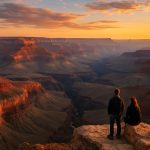
Imagine standing on the edge of a giant opening in the earth. The sun is just starting to rise, painting the deep rocks with shades of orange, red, and purple. The air is cool and quiet. This is the Grand Canyon, located in the state of Arizona. It is a truly massive canyon. A canyon is a deep valley with very steep sides. When you look across it, the other side seems miles away. In fact, in some places, it is eighteen miles wide! But how did this giant hole in the earth get here?
The story starts with water. Millions of years ago, a river called the Colorado River began flowing across this flat land. Over a very, very long time, the moving water began to wear away the solid rock. As the water carried away tiny bits of sand and stone, it slowly cut deeper and deeper into the ground. It is amazing to think that simple, flowing water has the power to wear away hard rock and create something so deep.
If you look at the walls of the canyon, you can see different colors. Each color is a different layer of rock. A layer is a sheet of material that sits on top of another. These layers of rock are like the pages of a giant history book. Each layer represents a different time in Earth’s history. Some of the deepest rocks at the very bottom are ancient. They are incredibly ancient, meaning they are billions of years old. When you stand on the top edge, which we call the rim, you are looking down through billions of years of history. Standing on the south rim of the canyon is a popular way to take in this incredible view. It really makes you realize how powerful nature is.
Let’s take a quick moment to review those five words we just heard, so you can start using them in your own conversations.
Our first word is canyon. A canyon is a deep valley with very steep sides, usually created by a river. For example, you could say: The hikers walked down into the deep canyon to find the river.
Next is ancient. When something is ancient, it is extremely old, from a time long ago. For example: We saw the ruins of an ancient temple during our trip.
Then we have rim. The rim is the outer edge of something round or deep, like a cup or a canyon. For example: She sat on the rim of the canyon and looked at the sunset.
Our fourth word is layer. A layer is a level of something that lies on top of or under another level. For example: He wore a warm layer of clothing under his winter jacket.
Finally, we have the phrase to wear away. This means to gradually damage, reduce, or destroy something over time through rubbing or washing. For example: The constant rain began to wear away the paint on the old wooden house.
Learning a language is a journey, and you are doing a fantastic job. Just remember, you don’t have to learn everything at once. Language learning happens step by step, through regular, daily practice. I hope you’ll join me again tomorrow as we continue our look at nature and the environment. Next time, we’ll head south to Florida to explore the Everglades and their unique wildlife. Thank you so much for listening to today’s episode of Blazing English. I’m Kenn, and I hope you have a wonderful day. See you next time!
Español
Hola y bienvenidos a Blazing English. Soy Kenn y me da mucho gusto que me acompañen hoy. En este podcast, aprendemos inglés de manera natural a través de la cultura estadounidense y el lenguaje cotidiano. Esta semana, estamos explorando la increíble belleza de la naturaleza y el medio ambiente. Hoy, haremos un viaje virtual a una de las maravillas naturales más famosas de todo el mundo. Estamos hablando del Gran Cañón, y aprenderemos un poco sobre cómo este enorme y hermoso lugar realmente se formó a lo largo de millones de años. Preparen una taza de café caliente, relájense y comencemos.
Antes de mirar la historia del canyon (cañón), mencionemos rápidamente cinco palabras clave que escucharás en el episodio de hoy. Presta atención a las palabras: canyon, ancient (antiguo), rim (borde), layer (capa), y la frase to wear away (desgastar). Hablaremos de lo que significan estas palabras en detalle un poco más tarde, pero por ahora, solo escúchalas mientras discutimos el tema de hoy.
Imagina estar de pie en el borde de una abertura gigante en la tierra. El sol apenas está comenzando a salir, pintando las rocas profundas con tonos de naranja, rojo y morado. El aire es fresco y silencioso. Este es el Gran Cañón, ubicado en el estado de Arizona. Es un canyon verdaderamente enorme. Un canyon es un valle profundo con lados muy escarpados. Cuando miras al otro lado, el otro lado parece estar a millas de distancia. De hecho, en algunos lugares, ¡tiene dieciocho millas de ancho! Pero, ¿cómo llegó aquí este agujero gigante en la tierra?
La historia comienza con el agua. Hace millones de años, un río llamado el río Colorado comenzó a fluir a través de esta tierra plana. Durante un tiempo muy, muy largo, el agua en movimiento comenzó a to wear away la roca sólida. A medida que el agua se llevaba pequeños trozos de arena y piedra, lentamente cortaba cada vez más profundo en el suelo. Es increíble pensar que el agua simple y que fluye tiene el poder de to wear away la roca dura y crear algo tan profundo.
Si miras las paredes del cañón, puedes ver diferentes colores. Cada color es una layer diferente de roca. Una layer es una hoja de material que se asienta sobre otra. Estas layers de roca son como las páginas de un libro de historia gigante. Cada layer representa un momento diferente en la historia de la Tierra. Algunas de las rocas más profundas en el fondo son ancient. Son increíblemente ancient, lo que significa que tienen miles de millones de años. Cuando te paras en el borde superior, al que llamamos rim, estás mirando hacia abajo a través de miles de millones de años de historia. Pararse en el sur rim del cañón es una forma popular de disfrutar de esta increíble vista. Realmente te hace darte cuenta de lo poderosa que es la naturaleza.
Tomemos un momento rápido para revisar esas cinco palabras que acabamos de escuchar, para que puedas comenzar a usarlas en tus propias conversaciones.
Nuestra primera palabra es canyon. Un canyon es un valle profundo con lados muy escarpados, generalmente creado por un río. Por ejemplo, podrías decir: The hikers walked down into the deep canyon to find the river. (Los excursionistas bajaron al cañón profundo para encontrar el río.)
La siguiente es ancient. Cuando algo es ancient, es extremadamente viejo, de un tiempo hace mucho tiempo. Por ejemplo: We saw the ruins of an ancient temple during our trip. (Vimos las ruinas de un templo antiguo durante nuestro viaje.)
Luego tenemos rim. El rim es el borde exterior de algo redondo o profundo, como una taza o un cañón. Por ejemplo: She sat on the rim of the canyon and looked at the sunset. (Ella se sentó en el borde del cañón y miró el atardecer.)
Nuestra cuarta palabra es layer. Una layer es un nivel de algo que se encuentra encima o debajo de otro nivel. Por ejemplo: He wore a warm layer of clothing under his winter jacket. (Él usaba una capa abrigada de ropa debajo de su chaqueta de invierno.)
Finalmente, tenemos la frase to wear away. Esto significa dañar, reducir o destruir gradualmente algo con el tiempo a través del roce o el lavado. Por ejemplo: The constant rain began to wear away the paint on the old wooden house. (La lluvia constante comenzó a desgastar la pintura en la vieja casa de madera.)
Aprender un idioma es un viaje, y estás haciendo un trabajo fantástico. Solo recuerda, no tienes que aprender todo a la vez. El aprendizaje de un idioma ocurre paso a paso, a través de la práctica diaria y regular. Espero que te unas a mí de nuevo mañana mientras continuamos nuestra mirada a la naturaleza y el medio ambiente. La próxima vez, nos dirigiremos al sur, a Florida, para explorar los Everglades y su fauna única. Muchas gracias por escuchar el episodio de hoy de Blazing English. Soy Kenn y espero que tengas un día maravilloso. ¡Nos vemos la próxima vez!
Français
Bonjour et bienvenue sur Blazing English. Je m’appelle Kenn et je suis ravi que vous vous joigniez à moi aujourd’hui. Dans ce podcast, nous apprenons l’anglais naturellement à travers la culture américaine et la langue de tous les jours. Cette semaine, nous explorons la beauté incroyable de la nature et de l’environnement. Aujourd’hui, nous faisons un voyage virtuel dans l’une des merveilles naturelles les plus célèbres du monde entier. Nous parlons du Grand Canyon, et nous allons en apprendre un peu plus sur la façon dont cet endroit immense et magnifique s’est réellement formé au cours de millions d’années. Prenez une tasse de café chaud, détendez-vous et c’est parti.
Avant de nous pencher sur l’histoire du canyon (canyon), mentionnons rapidement cinq mots clés que vous entendrez dans l’épisode d’aujourd’hui. Soyez attentifs aux mots : canyon, ancient (ancien), rim (rebord), layer (couche), et à l’expression to wear away (éroder). Nous parlerons de ce que signifient ces mots en détail un peu plus tard, mais pour l’instant, écoutez-les simplement pendant que nous discutons du sujet d’aujourd’hui.
Imaginez-vous debout au bord d’une ouverture géante dans la terre. Le soleil commence tout juste à se lever, peignant les roches profondes de nuances d’orange, de rouge et de violet. L’air est frais et calme. C’est le Grand Canyon, situé dans l’État de l’Arizona. C’est un canyon vraiment immense. Un canyon est une vallée profonde avec des parois très abruptes. Quand vous regardez de l’autre côté, l’autre côté semble être à des kilomètres. En fait, à certains endroits, il mesure dix-huit milles de large ! Mais comment ce trou géant dans la terre est-il arrivé là ?
L’histoire commence avec l’eau. Il y a des millions d’années, une rivière appelée le fleuve Colorado a commencé à couler à travers cette terre plate. Sur une très, très longue période de temps, l’eau en mouvement a commencé à to wear away la roche solide. À mesure que l’eau emportait de minuscules morceaux de sable et de pierre, elle coupait lentement de plus en plus profondément dans le sol. Il est incroyable de penser que de l’eau qui coule tout simplement a le pouvoir de to wear away de la roche dure et de créer quelque chose de si profond.
Si vous regardez les parois du canyon, vous pouvez voir différentes couleurs. Chaque couleur est une layer différente de roche. Une layer est une feuille de matériau qui repose sur une autre. Ces layers de roche sont comme les pages d’un livre d’histoire géant. Chaque layer représente une époque différente de l’histoire de la Terre. Certaines des roches les plus profondes tout au fond sont ancient. Elles sont incroyablement ancient, ce qui signifie qu’elles sont vieilles de milliards d’années. Lorsque vous vous tenez sur le bord supérieur, que nous appelons le rim, vous contemplez des milliards d’années d’histoire. Se tenir sur le rim sud du canyon est un moyen populaire de profiter de cette vue incroyable. Cela vous fait vraiment réaliser à quel point la nature est puissante.
Prenons un court instant pour passer en revue ces de cinq mots que nous venons d’entendre, afin que vous puissiez commencer à les utiliser dans vos propres conversations.
Notre premier mot est canyon. Un canyon est une vallée profonde avec des parois très abruptes, généralement créée par une rivière. Par exemple, vous pourriez dire : The hikers walked down into the deep canyon to find the river. (Les randonneurs sont descendus dans le canyon profond pour trouver la rivière.)
Ensuite, il y a ancient. Quand quelque chose est ancient, c’est extrêmement vieux, d’une époque lointaine. Par exemple : We saw the ruins of an ancient temple during our trip. (Nous avons vu les ruines d’un temple ancien pendant notre voyage.)
Ensuite, nous avons rim. Le rim est le bord extérieur de quelque chose de rond ou de profond, comme une tasse ou un canyon. Par exemple : She sat on the rim of the canyon and looked at the sunset. (Elle s’est assise sur le rebord du canyon et a regardé le coucher du soleil.)
Notre quatrième mot est layer. Une layer est un niveau de quelque chose qui se trouve au-dessus ou au-dessous d’un autre niveau. Par exemple : He wore a warm layer of clothing under his winter jacket. (Il portait une couche de vêtements chaude sous sa veste d’hiver.)
Enfin, nous avons l’expression to wear away. Cela signifie endommager, réduire ou détruire progressivement quelque chose au fil du temps par frottement ou lavage. Par exemple : The constant rain began to wear away the paint on the old wooden house. (La pluie constante a commencé à éroder la peinture sur la vieille maison en bois.)
L’apprentissage d’une langue est un voyage, et vous faites un travail fantastique. Rappelez-vous simplement que vous n’avez pas à tout apprendre d’un coup. L’apprentissage d’une langue se fait étape par étape, grâce à une pratique régulière et quotidienne. J’espère que vous vous joindrez à moi de nouveau demain alors que nous poursuivons notre regard sur la nature et l’environnement. La prochaine fois, nous nous dirigerons vers le sud en Floride pour explorer les Everglades et leur faune unique. Merci beaucoup d’avoir écouté l’épisode d’aujourd’hui de Blazing English. Je m’appelle Kenn et j’espère que vous passerez une merveilleuse journée. À la prochaine !
Português
Olá, e boas-vindas ao Blazing English. Eu sou o Kenn, e estou muito feliz por você estar se juntando a mim hoje. Neste podcast, aprendemos inglês de forma natural através da cultura americana e da linguagem do dia a dia. Esta semana, estamos explorando a incrível beleza da natureza e do meio ambiente. Hoje, vamos fazer uma viagem virtual a uma das maravilhas naturais mais famosas de todo o mundo. Estamos falando do Grand Canyon, e vamos aprender um pouco sobre como este lugar enorme e lindo realmente se formou ao longo de milhões de anos. Pegue uma xícara de café quente, relaxe e vamos começar.
Antes de olharmos para a história do canyon (cânion), vamos mencionar rapidamente cinco palavras-chave que você ouvirá no episódio de hoje. Fique atento às palavras: canyon, ancient (antigo), rim (borda), layer (camada), e a expressão to wear away (desgastar). Vamos falar sobre o que essas palavras significam em detalhes um pouco mais tarde, mas por enquanto, apenas ouça-as enquanto discutimos o tema de hoje.
Imagine estar de pé na borda de uma abertura gigante na terra. O sol está começando a nascer, pintando as rochas profundas com tons de laranja, vermelho e roxo. O ar está fresco e silencioso. Este é o Grand Canyon, localizado no estado do Arizona. É um canyon verdadeiramente enorme. Um canyon é um vale profundo com lados muito íngremes. Quando você olha para o outro lado, a outra margem parece estar a milhas de distância. Na verdade, em alguns lugares, tem dezoito milhas de largura! Mas como esse buraco gigante na terra foi parar aí?
A história começa com a água. Milhões de anos atrás, um rio chamado Rio Colorado começou a fluir por esta terra plana. Ao longo de um tempo muito, muito longo, a água em movimento começou a to wear away a rocha sólida. À medida que a água levava pequenos pedaços de areia e pedra, ela lentamente cortava cada vez mais fundo no solo. É incrível pensar que a água simples e fluida tem o poder de to wear away a rocha dura e criar algo tão profundo.
Se você olhar para as paredes do cânion, poderá ver cores diferentes. Cada cor é uma layer diferente de rocha. Uma layer é uma folha de material que fica em cima de outra. Essas layers de rocha são como as páginas de um livro de história gigante. Cada layer representa um tempo diferente na história da Terra. Algumas das rochas mais profundas bem no fundo são ancient. Elas são incrivelmente ancient, o que significa que têm bilhões de anos. Quando você fica na borda profissional, que chamamos de rim, você está olhando para baixo através de bilhões de anos de história. Ficar no rim sul do cânion é uma maneira popular de apreciar essa vista incrível. Realmente faz você perceber o quão poderosa é a natureza.
Vamos reservar um momento rápido para revisar essas cinco palavras que acabamos de ouvir, para que você possa começar a usá-las em suas próprias conversas.
Nossa primeira palavra é canyon. Um canyon é um vale profundo com lados muito íngremes, geralmente criado por um rio. Por exemplo, você poderia dizer: The hikers walked down into the deep canyon to find the river. (Os caminhantes desceram até o cânion profundo para encontrar o rio.)
A próxima é ancient. Quando algo é ancient, é extremamente antigo, de um tempo de muito tempo atrás. Por exemplo: We saw the ruins of an ancient temple during our trip. (Nós vimos as ruínas de um templo antigo durante nossa viagem.)
Depois temos rim. O rim é a borda externa de algo redondo ou profundo, como uma xícara ou um cânion. Por exemplo: She sat on the rim of the canyon and looked at the sunset. (Ela se sentou na borda do cânion e olhou para o pôr do sol.)
Nossa quarta palavra é layer. Uma layer é um nível de algo que fica em cima ou embaixo de outro nível. Por exemplo: He wore a warm layer of clothing under his winter jacket. (Ele usou uma camada quente de roupa sob sua jaqueta de inverno.)
Finalmente, temos a expressão to wear away. Isso significa danificar, reduzir ou destruir gradualmente algo ao longo do tempo através de fricção ou lavagem. Por exemplo: The constant rain began to wear away the paint on the old wooden house. (A chuva constante começou a desgastar a pintura na velha casa de madeira.)
Aprender um idioma é uma jornada, e você está fazendo um trabalho fantástico. Lembre-se apenas de que você não precisa aprender tudo de uma vez. O aprendizado de um idioma acontece passo a passo, através da prática diária e regular. Espero que você se junte a mim novamente amanhã, enquanto continuamos nossa análise da natureza e do meio ambiente. Da próxima vez, iremos para o sul, para a Flórida, para explorar os Everglades e sua vida selvagem única. Muito obrigado por ouvir o episódio de hoje do Blazing English. Eu sou o Kenn, e espero que você tenha um dia maravilhoso. Até a próxima!
Italiano
Ciao a tutti e benvenuti su Blazing English. Sono Kenn e sono davvero felice che vi uniate a me oggi. In questo podcast, impariamo l’inglese in modo naturale attraverso la cultura americana e la lingua di tutti i giorni. Questa settimana esploreremo l’incredibile bellezza della natura e dell’ambiente. Oggi faremo un viaggio virtuale in una delle meraviglie naturali più famose di tutto il mondo. Parleremo del Grand Canyon e scopriremo come questo luogo enorme e bellissimo si sia formato nel corso di milioni di anni. Prendete una tazza di caffè caldo, rilassatevi e iniziamo.
Prima di dare un’occhiata alla storia del canyon (gola), menzioniamo rapidamente cinque parole chiave che sentirete nell’episodio di oggi. Fate attenzione alle parole: canyon, ancient (antico), rim (bordo), layer (strato) e all’espressione to wear away (erodere). Parleremo del significato di queste parole in dettaglio più tardi, ma per ora ascoltatele semplicemente mentre discutiamo del tema di oggi.
Immaginate di essere in piedi sul bordo di una gigantesca apertura nella terra. Il sole sta iniziando a sorgere, dipingendo le rocce profonde con sfumature di arancione, rosso e viola. L’aria è fresca e silenziosa. Questo è il Grand Canyon, situato nello stato dell’Arizona. È un canyon davvero enorme. Un canyon è una valle profonda con pareti molto ripide. Quando guardate dall’altra parte, il lato opposto sembra lontano chilometri. In effetti, in alcuni punti, è largo diciotto miglia! Ma come è arrivato qui questo buco gigante nella terra?
La storia inizia con l’acqua. Milioni di anni fa, un fiume chiamato fiume Colorado iniziò a scorrere attraverso questa terra pianeggiante. Nel corso di un tempo molto, molto lungo, l’acqua in movimento iniziò a to wear away la roccia solida. Mentre l’acqua portava via minuscoli frammenti di sabbia e pietra, scavava lentamente sempre più a fondo nel terreno. È incredibile pensare che la semplice acqua che scorre abbia il potere di to wear away la roccia dura e creare qualcosa di così profondo.
Se guardate le pareti del canyon, potete vedere colori diversi. Ogni colore è un layer diverso di roccia. Un layer è un foglio di materiale che si trova sopra un altro. Questi layers di roccia sono come le pagine di un gigantesco libro di storia. Ogni layer rappresenta un momento diverso nella storia della Terra. Alcune delle rocce più profonde in fondo sono ancient. Sono incredibilmente ancient, il che significa che hanno miliardi di anni. Quando vi trovate sul bordo superiore, che chiamiamo rim, state guardando in basso attraverso miliardi di anni di storia. Stare sul rim meridionale del canyon è un modo popolare per godersi questa vista incredibile. Vi fa davvero rendere conto di quanto sia potente la natura.
Prendiamoci un breve momento per ripassare queste cinque parole che abbiamo appena sentito, così potrete iniziare a usarle nelle vostre conversazioni.
La nostra prima parola è canyon. Un canyon è una valle profonda con pareti molto ripide, solitamente creata da un fiume. Per esempio, potreste dire: The hikers walked down into the deep canyon to find the river. (Gli escursionisti sono scesi nel canyon profondo per trovare il fiume.)
Poi abbiamo ancient. Quando qualcosa è ancient, è estremamente vecchio, di un tempo di molto tempo fa. Per esempio: We saw the ruins of an ancient temple during our trip. (Abbiamo visto le rovine di un tempio antico durante il nostro viaggio.)
Poi abbiamo rim. Il rim è il bordo esterno di qualcosa di rotondo o profondo, come una tazza o un canyon. Per esempio: She sat on the rim of the canyon and looked at the sunset. (Si è seduta sul bordo del canyon e ha guardato il tramonto.)
La nostra quarta parola es layer. Un layer è un livello di qualcosa che si trova sopra o sotto un altro livello. Per esempio: He wore a warm layer of clothing under his winter jacket. (Indossava uno strato caldo di abiti sotto la sua giacca invernale.)
Infine, abbiamo l’espressione to wear away. Questo significa danneggiare, ridurre o distruggere gradualmente qualcosa nel tempo attraverso lo sfregamento o il lavaggio. Per esempio: The constant rain began to wear away the paint on the old wooden house. (La pioggia costante ha iniziato a erodere la vernice sulla vecchia casa di legno.)
Imparare una lingua è un viaggio e state facendo un lavoro fantastico. Ricordate solo che non dovete imparare tutto in una volta. L’apprendimento di una lingua avviene passo dopo passo, attraverso una pratica regolare e quotidiana. Spero che vi unirete di nuovo a me domani, mentre continuiamo il nostro sguardo sulla natura e sull’ambiente. La prossima volta ci dirigeremo a sud, in Florida, per esplorare le Everglades e la loro fauna selvatica unica. Grazie mille per aver ascoltato l’episodio di oggi di Blazing English. Sono Kenn e spero che passiate una splendida giornata. Alla prossima!
Deutsch
Hallo zusammen und willkommen bei Blazing English. Ich bin Kenn und ich freue mich sehr, dass ihr heute dabei seid. In diesem Podcast lernen wir Englisch auf natürliche Weise durch die amerikanische Kultur und die Alltagssprache. Diese Woche erkunden wir die unglaubliche Schönheit der Natur und der Umwelt. Heute machen wir eine virtuelle Reise zu einem der berühmtesten Naturwunder der ganzen Welt. Wir sprechen über den Grand Canyon und erfahren ein wenig darüber, wie dieser riesige, wunderschöne Ort im Laufe von Millionen von Jahren tatsächlich entstanden ist. Holt euch eine warme Tasse Kaffee, entspannt euch und lasst uns anfangen.
Bevor wir uns die Geschichte des canyon (Schlucht) ansehen, wollen wir kurz fünf Schlüsselwörter erwähnen, die ihr in der heutigen Episode hören werdet. Achtet besonders auf die Wörter: canyon, ancient (uralt), rim (Rand), layer (Schicht) und den Ausdruck to wear away (abtragen). Wir werden etwas später im Detail darüber sprechen, was diese Wörter bedeuten, aber hört erst einmal einfach darauf, während wir das heutige Thema besprechen.
Stellt euch vor, ihr steht am Rande einer riesigen Öffnung in der Erde. Die Sonne beginnt gerade aufzugehen und bemalt die tiefen Felsen mit Orange-, Rot- und Lilatönen. Die Luft ist kühl und still. Das ist der Grand Canyon im Bundesstaat Arizona. Es ist ein wirklich gewaltiger canyon. Ein canyon ist ein tiefes Tal mit sehr steilen Wänden. Wenn man hinüberschaut, scheint die andere Seite meilenweit entfernt zu sein. An manchen Stellen ist er sogar achtzehn Meilen breit! Aber wie ist dieses riesige Loch in der Erde überhaupt hierher gekommen?
Die Geschichte beginnt mit Wasser. Vor Millionen von Jahren begann ein Fluss namens Colorado River durch dieses flache Land zu fließen. Über einen sehr, sehr langen Zeitraum hinweg begann das fließende Wasser, den festen Felsen to wear away. Während das Wasser winzige Sand- und Steinstücke wegspülte, grub es sich langsam immer tiefer in den Boden. Es ist erstaunlich zu denken, dass einfaches, fließendes Wasser die Kraft hat, harten Fels to wear away und etwas so Tiefes zu erschaffen.
Wenn man sich die Wände des Canyons ansieht, kann man verschiedene Farben erkennen. Jede Farbe ist eine andere layer aus Gestein. Eine layer ist eine Materialschicht, die auf einer anderen liegt. Diese layers aus Gestein sind wie die Seiten eines riesigen Geschichtsbuchs. Jede layer repräsentiert eine andere Zeit in der Erdgeschichte. Einige der tiefsten Felsen ganz unten sind ancient. Sie sind unglaublich ancient, was bedeutet, dass sie Milliarden von Jahren alt sind. Wenn man am oberen Rand steht, den wir rim nennen, blickt man auf Milliarden von Jahren Geschichte hinab. Am südlichen rim des Canyons zu stehen, ist eine beliebte Art, diese unglaubliche Aussicht zu genießen. Es macht einem wirklich bewusst, wie mächtig die Natur ist.
Nehmen wir uns einen kurzen Moment Zeit, um diese fünf Wörter, die wir gerade gehört haben, noch einmal durchzugehen, damit ihr sie in euren eigenen Gesprächen verwenden könnt.
Unser erstes Wort ist canyon. Ein canyon ist ein tiefes Tal mit sehr steilen Wänden, das normalerweise durch einen Fluss entsteht. Ihr könntet zum Beispiel sagen: The hikers walked down into the deep canyon to find the river. (Die Wanderer gingen in die tiefe Schlucht hinunter, um den Fluss zu finden.)
Als Nächstes haben wir ancient. Wenn etwas ancient ist, ist es extrem alt, aus einer längst vergangenen Zeit. Zum Beispiel: We saw the ruins of an ancient temple during our trip. (Wir haben während unserer Reise die Ruinen eines alten Tempels gesehen.)
Dann haben wir rim. Der rim ist der äußere Rand von etwas Rundem oder Tiefem, wie einer Tasse oder einem Canyon. Zum Beispiel: She sat on the rim of the canyon and looked at the sunset. (Sie saß auf dem Rand des Canyons und schaute sich den Sonnenuntergang an.)
Unser viertes Wort ist layer. Eine layer ist eine Ebene von etwas, die über oder unter einer anderen Ebene liegt. Zum Beispiel: He wore a warm layer of clothing under his winter jacket. (Er trug eine warme Kleidungsschicht unter seiner Winterjacke.)
Schließlich haben wir den Ausdruck to wear away. Das bedeutet, etwas im Laufe der Zeit durch Reiben oder Waschen allmählich zu beschädigen, zu verringern oder zu zerstören. Zum Beispiel: The constant rain began to wear away the paint on the old wooden house. (Der ständige Regen begann, die Farbe auf dem alten Holzhaus abzutragen.)
Eine Sprache zu lernen ist eine Reise, und ihr macht einen fantastischen Job. Denkt daran, dass ihr nicht alles auf einmal lernen müsst. Sprachenlernen geschieht Schritt für Schritt, durch regelmäßiges, tägliches Üben. Ich hoffe, ihr seid morgen wieder dabei, wenn wir unseren Blick auf die Natur und die Umwelt fortsetzen. Nächstes Mal reisen wir nach Süden nach Florida, um die Everglades und ihre einzigartige Tierwelt zu erkunden. Vielen Dank fürs Zuhören bei der heutigen Episode von Blazing English. Ich bin Kenn und ich hoffe, ihr habt einen wunderschönen Tag. Bis zum nächsten Mal!