
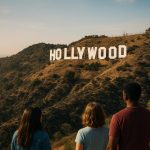

Hello there, and welcome back to Blazing English. I’m Kenn, your friend and host, and I’m so happy you’re joining me today. On this podcast, we explore American culture and everyday language to help you improve your English naturally. This week, we are diving into the exciting world of American movies. Today, we’re going to travel back in time to explore where it all started: the history of Hollywood. It’s a fascinating story of a small, quiet town that became the movie capital of the world. So, grab a warm drink, get comfortable, and let’s get started.
Before we jump into our story, let me share five interesting words and expressions you’ll hear in today’s episode. These are great words to add to your daily English. We’ll hear the word silent, the verb to transition, the noun studio, the adjective glamorous, and the common expression behind the scenes. Keep your ears open for these words as we talk, and we’ll review exactly what they mean and how to use them at the end of the episode.
Let’s start our journey in the early nineteen-hundreds. If you visited Southern California back then, you wouldn’t find a busy movie city. Hollywood was just a small, quiet farming community. It was full of orange groves, warm sunshine, and dirt roads. But soon, filmmakers from the East Coast of the United States started looking for a new place to make movies. They needed a place with reliable, bright weather because early cameras needed a lot of natural light. Southern California was perfect. It had sunny days almost all year, beautiful mountains, and the deep blue ocean nearby.
By the nineteen-tens, filmmakers began building the very first movie studios in Hollywood. A studio is a place where movies are made, with big rooms for indoor scenes and outdoor areas for filming. Soon, these studios were popping up everywhere, transforming the quiet town into a busy center of creative energy. But these early movies were very different from the ones we watch today. They were silent movies. In a silent movie, there is no spoken dialogue. You can’t hear the actors speak. Instead, people sat in dark, crowded theaters, smelling the fresh popcorn, while a piano player played music live in the room to match the action on the screen. The actors had to use huge facial expressions and body movements to show their emotions because they couldn’t say a word. It was a beautiful, unique art form, and people fell in love with this silent style of storytelling.
Then, in the late nineteen-twenties, everything changed. Technology improved, and filmmakers figured out how to record sound and synchronize it with the pictures. Hollywood had to transition to a completely new way of making movies. To transition means to change from one style or state to another. This transition from silent films to “talkies”—which is what people called movies with sound back then—was a major revolution. Imagine the shock of sitting in a theater and suddenly hearing an actor’s voice for the very first time! It was amazing, but this transition was not easy. Some actors who were incredibly popular in silent films had voices that didn’t match their faces, or they had trouble speaking their lines clearly. They struggled to transition to this new style of acting. But audiences loved hearing their favorite actors speak, and soon, silent films disappeared.
During the nineteen-thirties and forties, Hollywood entered what we now call its Golden Age. This was a time of pure magic and wonder. The movie studios became massive industries, and they created the idea of the movie star. Everything about Hollywood seemed incredibly glamorous during this era. When we think of Hollywood today, we often think of this glamorous lifestyle—beautiful actors wearing elegant dresses and sharp suits, walking down red carpets under bright, shining searchlights. It was a world of luxury, beauty, and high fashion. People went to the theater to escape their daily worries and dream of this glamorous world.
But making a movie is not just about the famous actors on the screen. There is a whole world behind the scenes. When we talk about behind the scenes, we mean all the work that happens out of sight of the camera. Think about the hundreds of people who work behind the scenes to make a single film. There are camera operators, light directors, costume designers, and makeup artists. There are writers working late into the night, and directors guiding the actors. Working behind the scenes is hard work, with long hours and lots of stress, but without these workers, the glamorous stars would never shine. Today, Hollywood is still a major symbol of creativity, and the hard work both on camera and behind the scenes continues to capture our imaginations.
Now, let’s take a couple of minutes to look a little closer at those five useful words and expressions we heard today. It’s always extremely helpful to review them so you can start using them in your own everyday English conversations.
Our first word today is silent. This adjective means completely quiet, with no sound or speaking. For example: “The old library was completely silent except for the sound of pages turning.”
Next, we have the verb to transition. This means to change or move from one position, state, or style to another. Here is an example: “It can be difficult to transition to a new job, but it is also very exciting.”
Our third word is studio. A studio is a place where movies, television shows, or music recordings are made. For example: “The actors spent all day filming inside the movie studio.”
The fourth word is glamorous. This describes something that is attractive, exciting, and connected with wealth or beauty. For example: “She looked very glamorous in her sparkling dress at the party.”
Finally, we have the expression behind the scenes. This refers to things that happen privately or out of public view, especially the work that goes into preparing a public show. Here’s how you can use it: “My friend works behind the scenes at the theater, helping with the stage lights.”
Learning a language is a journey that happens step by step, just like the incredible history of film. By listening to English for just a little bit every single day, you are making wonderful progress, so keep up the great work! I really hope you enjoyed today’s look at the history of Hollywood. Tomorrow, we’re going to continue our weekly theme of American movies. We’ll be talking about something very special: how animated movies changed filmmaking forever. It’s going to be a fun conversation, and I can’t wait to share it with you. Thank you so much for listening to Blazing English today. I’m Kenn, and I’ll talk to you tomorrow. Have a wonderful day!
Español
Hola a todos, y bienvenidos de nuevo a Blazing English. Soy Kenn, su amigo y anfitrión, y estoy muy feliz de que me acompañen hoy. En este podcast, exploramos la cultura estadounidense y el lenguaje cotidiano para ayudarlos a mejorar su inglés de manera natural. Esta semana, nos sumergimos en el emocionante mundo del cine estadounidense. Hoy, viajaremos en el tiempo para explorar dónde empezó todo: la historia de Hollywood. Es la fascinante historia de un pueblo pequeño y tranquilo que se convirtió en la capital mundial del cine. Así que, busquen una bebida caliente, pónganse cómodos y comencemos.
Antes de adentrarnos en nuestra historia, permítanme compartir cinco palabras y expresiones interesantes que escucharán en el episodio de hoy. Son palabras excelentes para agregar a su inglés diario. Escucharemos la palabra silent (silencioso), el verbo to transition (hacer la transición), el sustantivo studio (estudio), el adjetivo glamorous (glamuroso) y la expresión común behind the scenes (detrás de escena). Mantengan sus oídos atentos a estas palabras mientras hablamos, y revisaremos exactamente qué significan y cómo usarlas al final del episodio.
Comencemos nuestro viaje a principios del siglo veinte. Si hubieran visitado el sur de California en ese entonces, no habrían encontrado una concurrida ciudad de cine. Hollywood era solo una comunidad agrícola pequeña y tranquila. Estaba llena de campos de naranjos, un sol cálido y caminos de tierra. Pero pronto, los cineastas de la costa este de los Estados Unidos comenzaron a buscar un nuevo lugar para hacer películas. Necesitaban un lugar con un clima despejado y confiable porque las primeras cámaras necesitaban mucha luz natural. El sur de California era perfecto. Tenía días soleados casi todo el año, hermosas montañas y el azul profundo del océano cerca.
Para la década de 1910, los cineastas comenzaron a construir los primerísimos movie studios en Hollywood. Un studio es un lugar donde se hacen películas, con grandes salas para escenas interiores y áreas exteriores para filmar. Pronto, estos studios comenzaron a aparecer por todas partes, transformando el tranquilo pueblo en un concurrido centro de energía creativa. Pero estas primeras películas eran muy diferentes de las que vemos hoy. Eran películas silent. En una película silent, no hay diálogo hablado. No se puede escuchar hablar a los actores. En su lugar, la gente se sentaba en salas de cine oscuras y llenas de gente, oliendo las palomitas de maíz frescas, mientras un pianista tocaba música en vivo en la sala para acompañar la acción en la pantalla. Los actores tenían que usar expresiones faciales y movimientos corporales enormes para mostrar sus emociones porque no podían decir una sola palabra. Era una forma de arte hermosa y única, y la gente se enamoró de este estilo silent de contar historias.
Luego, a finales de la década de 1920, todo cambió. La tecnología mejoró y los cineastas descubrieron cómo grabar sonido y sincronizarlo con las imágenes. Hollywood tuvo que transition a una forma completamente nueva de hacer películas. To transition significa cambiar de un estilo o estado a otro. Esta transition de películas silent a “talkies” —que es como la gente llamaba a las películas con sonido en ese entonces— fue una gran revolución. ¡Imaginen la sorpresa de sentarse en un cine y de repente escuchar la voz de un actor por primera vez! Fue increíble, pero esta transition no fue fácil. Algunos actores que eran increíblemente populares en las películas silent tenían voces que no combinaban con sus rostros, o tenían problemas para pronunciar sus líneas con claridad. Les costó mucho transition a este nuevo estilo de actuación. Pero al público le encantaba escuchar hablar a sus actores favoritos y, pronto, las películas silent desaparecieron.
Durante las décadas de 1930 y 1940, Hollywood entró en lo que hoy llamamos su Época de Oro. Este fue un tiempo de pura magia y asombro. Los movie studios se convirtieron en industrias enormes y crearon la idea de la estrella de cine. Todo en Hollywood parecía increíblemente glamorous durante esta época. Cuando pensamos en Hollywood hoy en día, a menudo pensamos en este estilo de vida glamorous: actores hermosos con vestidos elegantes y trajes impecables, caminando por alfombras rojas bajo luces de búsqueda brillantes y resplandecientes. Era un mundo de lujo, belleza y alta moda. La gente iba al cine para escapar de sus preocupaciones diarias y soñar con este mundo glamorous.
Pero hacer una película no se trata solo de los actores famosos en la pantalla. Hay todo un mundo behind the scenes. Cuando hablamos de behind the scenes, nos referimos a todo el trabajo que ocurre fuera de la vista de la cámara. Piensen en las cientos de personas que trabajan behind the scenes para hacer una sola película. Hay camarógrafos, directores de iluminación, diseñadores de vestuario y maquilladores. Hay escritores que trabajan hasta altas horas de la noche y directores que guían a los actores. Trabajar behind the scenes es un trabajo duro, con largas horas y mucho estrés, pero sin estos trabajadores, las estrellas glamorous nunca brillarían. Hoy en día, Hollywood sigue siendo un gran símbolo de creatividad, y el arduo trabajo tanto frente a la cámara como behind the scenes continúa capturando nuestra imaginación.
Ahora, dediquemos un par de minutos a mirar un poco más de cerca esas cinco palabras y expresiones útiles que escuchamos hoy. Siempre es extremadamente útil repasarlas para que puedan comenzar a usarlas en sus propias conversaciones diarias en inglés.
Nuestra primera palabra de hoy es silent. Este adjetivo significa completamente silencioso, sin sonido ni habla. Por ejemplo: “The old library was completely silent except for the sound of pages turning.” (La vieja biblioteca estaba completamente en silencio excepto por el sonido de las páginas al pasar).
A continuación, tenemos el verbo to transition. Esto significa cambiar o moverse de una posición, estado o estilo a otro. Aquí hay un ejemplo: “It can be difficult to transition to a new job, but it is also very exciting.” (Puede ser difícil hacer la transición a un nuevo trabajo, pero también es muy emocionante).
Nuestra tercera palabra es studio. Un studio es un lugar donde se hacen películas, programas de televisión o grabaciones de música. Por ejemplo: “The actors spent all day filming inside the movie studio.” (Los actores pasaron todo el día filmando dentro del estudio de cine).
La cuarta palabra es glamorous. Esto describe algo que es atractivo, emocionante y relacionado con la riqueza o la belleza. Por ejemplo: “She looked very glamorous in her sparkling dress at the party.” (Ella se veía muy glamurosa con su vestido brillante en la fiesta).
Finalmente, tenemos la expresión behind the scenes. Esto se refiere a las cosas que suceden en privado o fuera de la vista del público, especialmente el trabajo que se realiza para preparar un espectáculo público. Así es como pueden usarla: “My friend works behind the scenes at the theater, helping with the stage lights.” (Mi amigo trabaja detrás de escena en el teatro, ayudando con las luces del escenario).
Aprender un idioma es un viaje que ocurre paso a paso, al igual que la increíble historia del cine. Al escuchar inglés solo un poco cada día, están logrando un progreso maravilloso, ¡así que sigan con el gran trabajo! Realmente espero que hayan disfrutado de la mirada de hoy a la historia de Hollywood. Mañana, continuaremos con nuestro tema semanal de películas estadounidenses. Hablaremos de algo muy especial: cómo las películas animadas cambiaron la realización cinematográfica para siempre. Va a ser una conversación divertida y no puedo esperar para compartirla con ustedes. Muchas gracias por escuchar Blazing English hoy. Soy Kenn y hablaré con ustedes mañana. ¡Que tengan un día maravilloso!
Français
Bonjour à tous, et bienvenue à nouveau sur Blazing English. Je suis Kenn, votre ami et animateur, et je suis tellement heureux que vous vous joigniez à moi aujourd’hui. Dans ce podcast, nous explorons la culture américaine et la langue de tous les jours pour vous aider à améliorer votre anglais naturellement. Cette semaine, nous plongeons dans le monde passionnant des films américains. Aujourd’hui, nous allons voyager dans le temps pour explorer là où tout a commencé : l’histoire d’Hollywood. C’est l’histoire fascinante d’une petite ville tranquille qui est devenue la capitale mondiale du cinéma. Alors, prenez une boisson chaude, installez-vous confortablement, et c’est parti.
Avant de nous plonger dans notre histoire, laissez-moi partager avec vous cinq mots et expressions intéressants que vous entendrez dans l’épisode d’aujourd’hui. Ce sont d’excellents mots à ajouter à votre anglais quotidien. Nous entendrons le mot silent (silencieux), le verbe to transition (faire la transition), le nom studio (studio), l’adjectif glamorous (glamour) et l’expression courante behind the scenes (dans les coulisses). Gardez l’oreille ouverte pour ces mots pendant que nous parlons, et nous verrons exactement ce qu’ils signifient et comment les utiliser à la fin de l’épisode.
Commençons notre voyage au début des années mille neuf cents. Si vous aviez visité le sud de la Californie à l’époque, vous n’auriez pas trouvé une ville de cinéma animée. Hollywood n’était qu’une petite communauté agricole tranquille. Elle était pleine de vergers d’orangers, de soleil chaud et de chemins de terre. Mais bientôt, des cinéastes de la côte est des États-Unis ont commencé à chercher un nouvel endroit pour faire des films. Ils avaient besoin d’un endroit avec un temps ensoleillé et fiable, car les premières caméras avaient besoin de beaucoup de lumière naturelle. Le sud de la Californie était parfait. Il y avait des jours ensoleillés presque toute l’année, de magnifiques montagnes et l’océan bleu profond à proximité.
Dans les années mille neuf cent dix, les cinéastes ont commencé à construire les tout premiers movie studios à Hollywood. Un studio est un endroit où l’on fait des films, avec de grandes pièces pour les scènes d’intérieur et des espaces extérieurs pour le tournage. Bientôt, ces studios sont apparus partout, transformant la ville tranquille en un centre animé d’énergie créative. Mais ces premiers films étaient très différents de ceux que nous regardons aujourd’hui. C’étaient des films silent. Dans un film silent, il n’y a pas de dialogue parlé. Vous n’entendez pas les acteurs parler. Au lieu de cela, les gens s’asseyaient dans des salles obscures et bondées, sentant le pop-corn frais, tandis qu’un pianiste jouait de la musique en direct dans la pièce pour accompagner l’action à l’écran. Les acteurs devaient utiliser de grandes expressions faciales et des mouvements corporels pour montrer leurs émotions car ils ne pouvaient pas dire un mot. C’était une forme d’art magnifique et unique, et les gens sont tombés amoureux de ce style silent de narration.
Puis, à la fin des années mille neuf cent vingt, tout a changé. La technologie s’est améliorée et les cinéastes ont trouvé comment enregistrer le son et le synchroniser avec les images. Hollywood a dû transition vers une toute nouvelle façon de faire des films. To transition signifie passer d’un style ou d’un état à un autre. Cette transition des films silent aux “talkies” — ce que les gens appelaient les films avec du son à l’époque — a été une révolution majeure. Imaginez le choc de s’asseoir dans une salle de cinéma et d’entendre soudainement la voix d’un acteur pour la toute première fois ! C’était incroyable, mais cette transition n’a pas été facile. Certains acteurs extrêmement populaires dans les films silent avaient des voix qui ne correspondaient pas à leur visage, ou avaient du mal à prononcer leurs répliques clairement. Ils ont eu du mal à transition vers ce nouveau style de jeu. Mais le public a adoré entendre parler ses acteurs préférés et, bientôt, les films silent ont disparu.
Pendant les années mille neuf cent trente et quarante, Hollywood est entré dans ce que nous appelons aujourd’hui son âge d’or. C’était une époque de pure magie et d’émerveillement. Les movie studios sont devenus des industries massives, et ils ont créé l’idée de la star de cinéma. Tout ce qui concernait Hollywood semblait incroyablement glamorous à cette époque. Quand nous pensons à Hollywood aujourd’hui, nous pensons souvent à ce style de vie glamorous — de magnifiques acteurs portant des robes élégantes et des costumes élégants, marchant sur des tapis rouges sous des projecteurs brillants et éclatants. C’était un monde de luxe, de beauté et de haute couture. Les gens allaient au cinéma pour échapper à leurs soucis quotidiens et rêver de ce monde glamorous.
Mais faire un film ne se résume pas aux acteurs célèbres à l’écran. Il y a tout un monde behind the scenes. Quand nous parlons de behind the scenes, nous voulons dire tout le travail qui se déroule hors de portée de la caméra. Pensez aux centaines de personnes qui travaillent behind the scenes pour faire un seul film. Il y a des cadreurs, des directeurs de la lumière, des créateurs de costumes et des maquilleurs. Il y a des scénaristes qui travaillent tard dans la nuit et des réalisateurs qui guident les acteurs. Travailler behind the scenes est un travail difficile, avec de longues heures et beaucoup de stress, mais sans ces travailleurs, les stars glamorous ne brilleraient jamais. Aujourd’hui, Hollywood est toujours un symbole majeur de créativité, et le travail acharné, tant devant la caméra que behind the scenes, continue de captiver notre imagination.
À présent, prenons quelques minutes pour examiner d’un peu plus près ces cinq mots et expressions utiles que nous avons entendus aujourd’hui. Il est toujours extrêmement utile de les revoir afin que vous puissiez commencer à les utiliser dans vos propres conversations quotidiennes en anglais.
Notre premier mot aujourd’hui est silent. Cet adjectif signifie complètement silencieux, sans aucun son ni parole. Par exemple : “The old library was completely silent except for the sound of pages turning.” (La vieille bibliothèque était complètement silencieuse à l’exception du bruit des pages qui se tournent).
Ensuite, nous avons le verbe to transition. Cela signifie changer ou passer d’une position, d’un état ou d’un style à un autre. Voici un exemple : “It can be difficult to transition to a new job, but it is also very exciting.” (Il peut être difficile de faire la transition vers un nouvel emploi, mais c’est aussi très excitant).
Notre troisième mot est studio. Un studio est un endroit où l’on produit des films, des émissions de télévision ou des enregistrements musicaux. Par exemple : “The actors spent all day filming inside the movie studio.” (Les acteurs ont passé toute la journée à filmer à l’intérieur du studio de cinéma).
Le quatrième mot est glamorous. Cela décrit quelque chose qui est attrayant, excitant et lié à la richesse ou à la beauté. Par exemple : “She looked very glamorous in her sparkling dress at the party.” (Elle avait l’air très glamour dans sa robe scintillante à la fête).
Enfin, nous avons l’expression behind the scenes. Cela fait référence aux choses qui se passent en privé ou à l’abri des regards du public, en particulier le travail nécessaire à la préparation d’un spectacle public. Voici comment vous pouvez l’utiliser : “My friend works behind the scenes at the theater, helping with the stage lights.” (Mon ami travaille dans les coulisses du théâtre, aidant avec les lumières de la scène).
Apprendre une langue est un voyage qui se fait étape par étape, tout comme l’incroyable histoire du cinéma. En écoutant de l’anglais juste un tout petit peu chaque jour, vous faites de merveilleux progrès, alors continuez ainsi ! J’espère vraiment que vous avez apprécié ce regard d’aujourd’hui sur l’histoire d’Hollywood. Demain, nous poursuivrons notre thème hebdomadaire des films américains. Nous parlerons de quelque chose de très spécial : comment les films d’animation ont changé la création cinématographique pour toujours. Ce sera une conversation amusante, et j’ai hâte de la partager avec vous. Merci beaucoup d’avoir écouté Blazing English aujourd’hui. Je m’appelle Kenn, et je vous reparlerai demain. Passez une merveilleuse journée !
Português
Olá a todos, e bem-vindos de volta ao Blazing English. Eu sou o Kenn, seu amigo e apresentador, e estou muito feliz por vocês estarem se juntando a mim hoje. Neste podcast, exploramos a cultura americana e a linguagem do dia a dia para ajudar vocês a melhorarem seu inglês de forma natural. Esta semana, estamos mergulhando no emocionante mundo dos filmes americanos. Hoje, vamos viajar de volta no tempo para explorar onde tudo começou: a história de Hollywood. É a história fascinante de uma cidade pequena e tranquila que se tornou a capital mundial do cinema. Então, peguem uma bebida quente, fiquem confortáveis e vamos começar.
Antes de entrarmos na nossa história, permitam-me compartilhar cinco palavras e expressões interessantes que vocês ouvirão no episódio de hoje. São ótimas palavras para adicionar ao seu inglês diário. Ouviremos a palavra silent (silencioso), o verbo to transition (fazer a transição), o substantivo studio (estúdio), o adjetivo glamorous (glamoroso) e a expressão comum behind the scenes (bastidores). Fiquem com os ouvidos atentos a essas palavras enquanto conversamos, e revisaremos exatamente o que significam e como usá-las no final do episódio.
Comecemos nossa jornada no início dos anos mil novecentos. Se vocês visitassem o sul da Califórnia naquela época, não encontrariam uma cidade de cinema movimentada. Hollywood era apenas uma comunidade agrícola pequena e tranquila. Estava cheia de laranjais, sol quente e estradas de terra. Mas logo, os cineastas da Costa Leste dos Estados Unidos começaram a procurar um novo lugar para fazer filmes. Eles precisavam de um lugar com um clima firme e ensolarado porque as primeiras câmeras precisavam de muita luz natural. O sul da Califórnia era perfeito. Tinha dias ensolarados quase o ano todo, montanhas bonitas e o oceano azul profundo por perto.
Na década de mil novecentos e dez, os cineastas começaram a construir os primeiríssimos movie studios em Hollywood. Um studio é um lugar onde os filmes são feitos, com salas grandes para cenas internas e áreas externas para filmagem. Logo, esses studios estavam surgindo por toda parte, transformando a cidade tranquila em um centro movimentado de energia criativa. Mas esses primeiros filmes eram muito diferentes dos que assistimos hoje. Eram filmes silent. Em um filme silent, não há diálogo falado. Você não consegue ouvir os atores falarem. Em vez disso, as pessoas se sentavam em salas de cinema escuras e cheias, sentindo o cheiro de pipoca fresca, enquanto um pianista tocais música ao vivo na sala para acompanhar a ação na tela. Os atores tinham que usar expressões faciais e movimentos corporais enormes para mostrar suas emoções porque não podiam dizer uma única palavra. Era uma forma de arte bonita e única, e as pessoas se apaixonaram por esse estilo silent de contar histórias.
Então, no final da década de mil novecentos e vinte, tudo mudou. A tecnologia melhorou e os cineastas descobriram como gravar o som e sincronizá-lo com as imagens. Hollywood teve que transition para uma maneira completamente nova de fazer filmes. To transition significa mudar de um estilo ou estado para outro. Essa transition de filmes silent para “talkies” —que era como as pessoas chamavam os filmes com som naquela época— foi uma grande revolução. Imaginem o choque de se sentar em um cinema e, de repente, ouvir a voz de um actor pela primeiríssima vez! Foi incrível, mas essa transition não foi fácil. Alguns atores que eram incrivelmente populares em filmes silent tinham vozes que não combinavam com seus rostos, ou tinham dificuldade para falar suas falas com clareza. Eles lutaram para transition para esse novo estilo de atuação. Mas o público adorou ouvir seus atores favoritos falarem e, logo, os filmes silent desapareceram.
Durante as décadas de mil novecentos e trinta e quarenta, Hollywood entrou no que hoje chamamos de sua Era de Ouro. Este foi um tempo de pura magia e encanto. Os movie studios se tornaram indústrias gigantescas e criaram a ideia da estrela de cinema. Tudo em Hollywood parecia incrivelmente glamorous durante essa época. Quando pensamos em Hollywood hoje, costumamos pensar nesse estilo de vida glamorous — atores bonitos vestindo vestidos elegantes e ternos bem cortados, caminhando por tapetes vermelhos sob holofotes brilhantes e reluzentes. Era um mundo de luxo, beleza e alta costura. As pessoas iam ao cinema para escapar de suas preocupações diárias e sonhar com esse mundo glamorous.
But fazer um filme não é apenas sobre os atores famosos na tela. Há todo um mundo behind the scenes. Quando falamos sobre behind the scenes, queremos dizer todo o trabalho que acontece fora do alcance da câmera. Pensem nas centenas de pessoas que trabalham behind the scenes para fazer um único filme. Há operadores de câmera, diretores de iluminação, figurinistas e maquiadores. Há roteiristas trabalhando até tarde da noite e diretores orientando os atores. Trabalhar behind the scenes é um trabalho duro, com longas horas e muito estresse, mas sem esses trabalhadores, as estrelas glamorous nunca brilhariam. Hoje, Hollywood ainda é um grande símbolo de criatividade, e o trabalho duro, tanto diante das câmeras quanto behind the scenes, continua a capturar nossa imaginação.
Agora, vamos dedicar alguns minutos para olhar um pouco mais de perto aquelas cinco palavras e expressões úteis que ouvimos hoje. É sempre extremamente útil revisá-las para que vocês possam começar a usá-las em suas próprias conversas diárias em inglês.
Nossa primeira palavra hoje é silent. Este adjetivo significa completamente silencioso, sem som ou fala. Por exemplo: “The old library was completely silent except for the sound of pages turning.” (A velha biblioteca estava completamente silenciosa, exceto pelo som das páginas virando).
Em seguida, temos o verbo to transition. Isso significa mudar ou passar de uma posição, estado ou estilo para outro. Aqui está um exemplo: “It can be difficult to transition to a new job, but it is also very exciting.” (Pode ser difícil fazer a transição para um novo emprego, mas também é muito emocionante).
Nossa terceira palavra é studio. Um studio é um lugar onde são feitos filmes, programas de televisão ou gravações de música. Por exemplo: “The actors spent all day filming inside the movie studio.” (Os atores passaram o dia todo filmando dentro do estúdio de cinema).
A quarta palavra é glamorous. Isso descreve algo que é atraente, emocionante e associado à riqueza ou beleza. Por exemplo: “She looked very glamorous in her sparkling dress at the party.” (Ela parecia muito glamorosa em seu vestido brilhante na festa).
Finalmente, temos a expressão behind the scenes. Isso se refere a coisas que acontecem de forma privada ou fora da vista do público, especialmente o trabalho envolvido na preparação de um show público. Veja como você pode usá-la: “My friend works behind the scenes at the theater, helping with the stage lights.” (Meu amigo trabalha nos bastidores do teatro, ajudando com as luzes do palco).
Aprender um idioma é uma jornada que acontece passo a passo, exatamente como a incrível história do cinema. Ao ouvir inglês apenas um pouquinho todos os dias, vocês estão fazendo um progresso maravilhoso, então continuem com o ótimo trabalho! Eu realmente espero que tenham gostado da nossa visão de hoje sobre a história de Hollywood. Amanhã, continuaremos com nosso tema semanal de filmes americanos. Falaremos sobre algo muito especial: como os filmes de animação mudaram a produção cinematográfica para sempre. Vai ser uma conversa divertida e mal posso esperar para compartilhá-la com vocês. Muito obrigado por ouvir o Blazing English hoje. Eu sou o Kenn, e nos falamos amanhã. Tenham um dia maravilhoso!
Italiano
Ciao a tutti e benvenuti di nuovo a Blazing English. Sono Kenn, il vostro amico e presentatore, e sono davvero felice che vi uniate a me oggi. In questo podcast, esploriamo la cultura americana e la lingua di tutti i giorni per aiutarvi a migliorare il vostro inglese in modo naturale. Questa settimana ci immergeremo nell’eccitante mondo del cinema americano. Oggi viaggeremo indietro nel tempo per esplorare dove tutto è iniziato: la storia di Hollywood. È la storia affascinante di una cittadina piccola e tranquilla che è diventata la capitale mondiale del cinema. Quindi, prendete una bevanda calda, mettetevi comodi e iniziamo.
Prima di tuffarci nella nostra storia, lasciate che condivida con voi cinque parole ed espressioni interessanti che sentirete nell’episodio di oggi. Sono ottime parole da aggiungere al vostro inglese quotidiano. Sentiremo la parola silent (silenzioso), il verbo to transition (fare la transizione), il sostantivo studio (studio), l’aggettivo glamorous (glamour) e l’espressione comune behind the scenes (dietro le quinte). Tenete le orecchie aperte per queste parole mentre parliamo, e alla fine dell’episodio vedremo esattamente cosa significano e come usarle.
Iniziamo il nostro viaggio nei primi anni del Novecento. Se aveste visitato la California meridionale a quel tempo, non avreste trovato una trafficata città del cinema. Hollywood era solo una piccola e tranquilla comunità agricola. Era piena di aranceti, sole caldo e strade sterrate. Mas presto, i registi della costa orientale degli Stati Uniti iniziarono a cercare un nuovo posto dove girare i film. Avevano bisogno di un luogo con un clima sereno e affidabile perché le prime macchine da presa necessitavano di molta luce naturale. La California meridionale era perfetta. Aveva giornate soleggiate quasi tutto l’anno, bellissime montagne e il profondo oceano blu nelle vicinanze.
Negli anni Dieci del Novecento, i registi iniziarono a costruire i primissimi movie studios a Hollywood. Uno studio è un luogo in cui si girano i film, con grandi sale per le scene al chiuso e aree all’aperto per le riprese. Ben presto, questi studios stavano spuntando ovunque, trasformando la tranquilla cittadina in un vivace centro di energia creativa. Ma questi primi film erano molto diversi da quelli che guardiamo oggi. Erano film silent. In un film silent non c’è dialogo parlato. Non si sentono gli attori parlare. Invece, la gente sedeva in sale cinematografiche buie e affollate, sentendo il profumo di popcorn freschi, mentre un pianista suonava musica dal vivo nella sala per accompagnare l’azione sullo schermo. Gli attori dovevano usare grandi espressioni facciali e movimenti del corpo per mostrare le loro emozioni perché non potevano dire una parola. Era una forma d’arte bellissima e unica, e la gente si innamorò di questo stile silent di narrazione.
Poi, alla fine degli anni Venti, tutto cambiò. La tecnologia migliorò e i registi capirono come registrare il suono e sincronizzarlo con le immagini. Hollywood dovette transition verso un modo completamente nuovo di fare film. To transition significa passare da uno stile o stato a un altro. Questa transition dai film silent ai “talkies” —che era il modo in cui la gente chiamava i film con il sonoro all’epoca— fu una grande rivoluzione. Immaginate lo shock di sedersi in un cinema e sentire improvvisamente la voce di un attore per la primissima volta! Fu incredibile, ma questa transition non fu facile. Alcuni attori che erano incredibilmente popolari nei film silent avevano voci che non si adattavano ai loro volti, o avevano difficoltà a pronunciare le loro battute chiaramente. Fecero fatica a transition a questo nuovo stile di recitazione. Ma il pubblico amava sentire parlare i propri attori preferiti e, presto, i film silent scomparvero.
Durante gli anni Trenta e Quaranta, Hollywood entrò in quella che oggi chiamiamo la sua età dell’oro. Questo fu un periodo di pura magia e meraviglia. I movie studios diventarono industrie enormi e crearono l’idea della stella del cinema. Tutto ciò che riguardava Hollywood sembrava incredibilmente glamorous in quell’era. Quando pensiamo a Hollywood oggi, spesso pensiamo a questo stile di vita glamorous — attori bellissimi che indossano abiti eleganti e completi impeccabili, camminando su tappeti rossi sotto riflettori luminosi e splendenti. Era un mondo di lusso, bellezza e alta moda. La gente andava al cinema per sfuggire alle preoccupazioni quotidiane e sognare questo mondo glamorous.
Ma fare un film non riguarda solo i famosi attori sullo schermo. C’è un intero mondo behind the scenes. Quando parliamo di behind the scenes, intendiamo tutto il lavoro che avviene fuori dalla vista della telecamera. Pensate alle centinaia di persone che lavorano behind the scenes per realizzare un singolo film. Ci sono operatori di ripresa, direttori delle luci, costumisti e truccatori. Ci sono sceneggiatori che lavorano fino a tarda notte e registi che guidano gli attori. Lavorare behind the scenes è un lavoro duro, con lunghe ore e molto stress, ma senza questi lavoratori, le stelle glamorous non brillerebbero mai. Oggi Hollywood è ancora un grande simbolo di creatività e il duro lavoro, sia davanti alla telecamera che behind the scenes, continua a catturare la nostra immaginazione.
Ora prendiamoci un paio di minuti per guardare un po’ più da vicino quelle tre parole ed espressioni utili che abbiamo sentito oggi. È sempre estremamente utile ripassarle in modo da poter iniziare a usarle nelle vostre conversazioni quotidiane in inglese.
La nostra prima parola di oggi è silent. Questo aggettivo significa completamente silenzioso, senza alcun suono o parola. Per esempio: “The old library was completely silent except for the sound of pages turning.” (La vecchia biblioteca era completamente silenziosa, eccetto per il rumore delle pagine che venivano girate).
Poi abbiamo il verbo to transition. Questo significa cambiare o passare da una posizione, stato o stile a un altro. Ecco un esempio: “It can be difficult to transition to a new job, but it is also very exciting.” (Può essere difficile fare la transizione verso un nuovo lavoro, ma è anche molto emozionante).
La nostra terza parola è studio. Uno studio è un luogo in cui si realizzano film, programmi televisivi o registrazioni musicali. Per esempio: “The actors spent all day filming inside the movie studio.” (Gli attori hanno passato tutto il giorno a girare all’interno dello studio cinematografico).
La quarta parola è glamorous. Questo descrive qualcosa che è attraente, affascinante e associato alla ricchezza o alla bellezza. Per esempio: “She looked very glamorous in her sparkling dress at the party.” (Sembrava molto affascinante nel suo abito scintillante alla festa).
Infine, abbiamo l’espressione behind the scenes. Questa si riferisce a cose che accadono privatamente o fuori dalla vista del pubblico, in particolare al lavoro che serve per preparare uno spettacolo pubblico. Ecco come potete usarla: “My friend works behind the scenes at the theater, helping with the stage lights.” (Il mio amico lavora dietro le quinte a teatro, aiutando con le luci di scena).
Imparare una lingua è un viaggio che avviene passo dopo passo, proprio come l’incredibile storia del cinema. Ascoltando l’inglese anche solo per un pochino ogni giorno, state facendo progressi meravigliosi, quindi continuate così! Spero davvero che vi sia piaciuto il viaggio di oggi nella storia di Hollywood. Domani continueremo con il nostro tema settimanale sul cinema americano. Parleremo di qualcosa di molto speciale: come i film d’animazione hanno cambiato per sempre la cinematografia. Sarà una conversazione divertente e non vedo l’ora di condividerla con voi. Grazie mille per aver ascoltato Blazing English oggi. Sono Kenn e vi parlerò domani. Passate una splendida giornata!
Deutsch
Hallo zusammen und willkommen zurück bei Blazing English. Ich bin Kenn, Ihr Freund und Gastgeber, und ich freue mich sehr, dass Sie heute dabei sind. In diesem Podcast erkunden wir die amerikanische Kultur und die Alltagssprache, um Ihnen dabei zu helfen, Ihr Englisch auf natürliche Weise zu verbessern. Diese Woche tauchen wir ein in die aufregende Welt der amerikanischen Filme. Heute reisen wir in der Zeit zurück, um zu erkunden, wo alles begann: die Geschichte von Hollywood. Es ist die faszinierende Geschichte einer kleinen, ruhigen Stadt, die zur Filmhauptstadt der Welt wurde. Schnappen Sie sich also ein warmes Getränk, machen Sie es sich bequem und lassen Sie uns anfangen.
Bevor wir in unsere Geschichte eintauchen, möchte ich fünf interessante Wörter und Ausdrücke mit Ihnen teilen, die Sie in der heutigen Episode hören werden. Dies sind großartige Wörter, die Sie in Ihr tägliches Englisch aufnehmen können. Wir werden das Wort silent (stumm), das Verb to transition (übergehen), das Substantiv studio (Studio), das Adjektiv glamorous (glamourös) und den geläufigen Ausdruck behind the scenes (hinter den Kulissen) hören. Halten Sie beim Zuhören die Ohren offen für diese Wörter, und am Ende der Episode werden wir genau wiederholen, was sie bedeuten und wie man sie verwendet.
Beginnen wir unsere Reise im frühen zwanzigsten Jahrhundert. Wenn Sie damals das südliche Kalifornien besucht hätten, hätten Sie keine geschäftige Filmstadt vorgefunden. Hollywood war nur eine kleine, ruhige landwirtschaftliche Gemeinde. Es war voller Orangenhaine, warmem Sonnenschein und Feldwegen. Doch schon bald begannen Filmemacher von der Ostküste der USA, nach einem neuen Ort für die Filmproduktion zu suchen. Sie brauchten einen Ort mit verlässlichem, hellem Wetter, da die frühen Kameras viel natürliches Licht benötigten. Das südliche Kalifornien war perfekt. Es hatte fast das ganze Jahr über sonnige Tage, wunderschöne Berge und den tiefblauen Ozean in der Nähe.
In den 1910er Jahren begannen Filmemacher, die allerersten movie studios in Hollywood zu bauen. Ein studio ist ein Ort, an dem Filme gedreht werden, mit großen Räumen für Innenszenen und Außenbereichen für Dreharbeiten. Schon bald schossen diese studios überall aus dem Boden und verwandelten die ruhige Stadt in ein geschäftiges Zentrum kreativer Energie. Aber diese frühen Filme unterschieden sich stark von denen, die wir heute sehen. Es waren silent Filme. In einem silent Film gibt es keinen gesprochenen Dialog. Man kann die Schauspieler nicht sprechen hören. Stattdessen saßen die Menschen in dunklen, vollen Kinosälen, rochten das frische Popcorn, während ein Klavierspieler live im Raum Musik spielte, die zur Handlung auf der Leinwand passte. Die Schauspieler mussten enorme Mimik und Körperbewegungen einsetzen, um ihre Gefühle zu zeigen, weil sie kein Wort sagen durften. Es war eine wunderschöne, einzigartige Kunstform, und die Menschen verliebten sich in diesen silent Stil des Geschichtenerzählens.
Ende der 1920er Jahre änderte sich dann alles. Die Technologie verbesserte sich, und die Filmemacher fanden heraus, wie man Ton aufnimmt und ihn mit den Bildern synchronisiert. Hollywood musste zu einer völlig neuen Art des Filmemachens transition. To transition bedeutet, von einem Stil oder Zustand in einen anderen zu wechseln. Dieser transition von silent Filmen zu “Talkies” —wie man Filme mit Ton damals nannte— war eine gewaltige Revolution. Stellen Sie sich den Schock vor, in einem Kino zu sitzen und plötzlich zum allerersten Mal die Stimme eines Schauspielers zu hören! Es war fantastisch, aber dieser transition war nicht einfach. Einige Schauspieler, die in silent Filmen unglaublich beliebt waren, hatten Stimmen, die nicht zu ihren Gesichtern passen, oder sie hatten Schwierigkeiten, ihren Text klar zu sprechen. Sie taten sich schwer damit, zu diesem neuen Schauspielstil zu transition. Aber das Publikum liebte es, seine Lieblingsschauspieler sprechen zu hören, und schon bald verschwanden die silent Filme.
In den 1930er und 1940er Jahren trat Hollywood in das ein, was wir heute als sein Goldenes Zeitalter bezeichnen. Dies war eine Zeit puren Zaubers und des Staunens. Die movie studios wurden zu riesigen Industrien und erfanden die Idee des Filmstars. Alles an Hollywood wirkte in dieser Ära unglaublich glamorous. Wenn wir heute an Hollywood denken, denken wir oft an diesen glamorous Lebensstil —wunderschöne Schauspielerinnen und Schauspieler in eleganten Kleidern und eleganten Anzügen, die unter hellen, strahlenden Scheinwerfern über rote Teppiche schreiten. Es war eine Welt voller Luxus, Schönheit und High Fashion. Die Menschen gingen ins Kino, um ihren Alltagssorgen zu entfliehen und von dieser glamorous Welt zu träumen.
Aber bei einem Film geht es nicht nur um die berühmten Schauspieler auf der Leinwand. Es gibt eine ganze Welt behind the scenes. Wenn wir von behind the scenes sprechen, meinen wir all die Arbeit, die außerhalb des Sichtfelds der Kamera stattfindet. Denken Sie an die Hunderte von Menschen, die behind the scenes arbeiten, um einen einzigen Film zu machen. Es gibt Kameraleute, Lichttechniker, Kostümbildner und Maskenbildner. Es gibt Autoren, die bis spät in die Nacht arbeiten, und Regisseure, die die Schauspieler anleiten. Die Arbeit behind the scenes ist harte Arbeit mit langen Arbeitszeiten und viel Stress, aber ohne diese Mitarbeiter würden die glamorous Stars niemals glänzen. Heute ist Hollywood immer noch ein großes Symbol für Kreativität, und die harte Arbeit sowohl vor der Kamera als auch behind the scenes zieht uns weiterhin in ihren Bann.
Lassen Sie uns nun ein paar Minuten Zeit nehmen, um uns diese fünf nützlichen Wörter und Ausdrücke, die wir heute gehört haben, etwas genauer anzusehen. Es ist immer äußerst hilfreich, sie zu wiederholen, damit Sie beginnen können, sie in Ihren eigenen täglichen englischen Gesprächen zu verwenden.
Unser erstes Wort heute ist silent. Dieses Adjektiv bedeutet völlig still, ohne Ton oder Sprechen. Zum Beispiel: “The old library was completely silent except for the sound of pages turning.” (Die alte Bibliothek war bis auf das Geräusch des Umblätterns von Seiten völlig stumm).
Als Nächstes haben wir das Verb to transition. Dies bedeutet, von einer Position, einem Zustand oder einem Stil in einen anderen zu wechseln oder überzugehen. Hier ist ein Beispiel: “It can be difficult to transition to a new job, but it is also very exciting.” (Es kann schwierig sein, in einen neuen Job überzugehen, aber es ist auch sehr aufregend).
Unser drittes Wort ist studio. Ein studio ist ein Ort, an dem Filme, Fernsehsendungen oder Musikaufnahmen gemacht werden. Zum Beispiel: “The actors spent all day filming inside the movie studio.” (Die Schauspieler verbrachten den ganzen Tag mit Dreharbeiten im Filmstudio).
Das vierte Wort ist glamorous. Dies beschreibt etwas, das attraktiv, aufregend und mit Reichtum oder Schönheit verbunden ist. Zum Beispiel: “She looked very glamorous in her sparkling dress at the party.” (Sie sah in ihrem glitzernden Kleid auf der Party sehr glamourös aus).
Schließlich haben wir den Ausdruck behind the scenes. Dies bezieht sich auf Dinge, die im Privaten oder außerhalb der Öffentlichkeit geschehen, insbesondere auf die Arbeit, die in die Vorbereitung einer öffentlichen Show fließt. So können Sie ihn verwenden: “My friend works behind the scenes at the theater, helping with the stage lights.” (Mein Freund arbeitet hinter den Kulissen am Theater und hilft bei der Bühnenbeleuchtung).
Eine Sprache zu lernen ist eine Reise, die Schritt für Schritt verläuft, genau wie die unglaubliche Geschichte des Films. Indem Sie jeden Tag nur ein kleines bisschen Englisch hören, machen Sie wunderbare Fortschritte, also machen Sie weiter so! Ich hoffe wirklich, dass Ihnen der heutige Blick auf die Geschichte von Hollywood gefallen hat. Morgen werden wir unser wöchentliches Thema amerikanische Filme fortsetzen. Wir werden über etwas ganz Besonderes sprechen: wie Animationsfilme das Filmemachen für immer verändert haben. Es wird ein unterhaltsames Gespräch werden, und ich kann es kaum erwarten, es mit Ihnen zu teilen. Vielen Dank, dass Sie heute Blazing English gehört haben. Ich bin Kenn, und wir hören uns morgen. Haben Sie einen wunderschönen Tag!